
What Is a Marketing Channel?
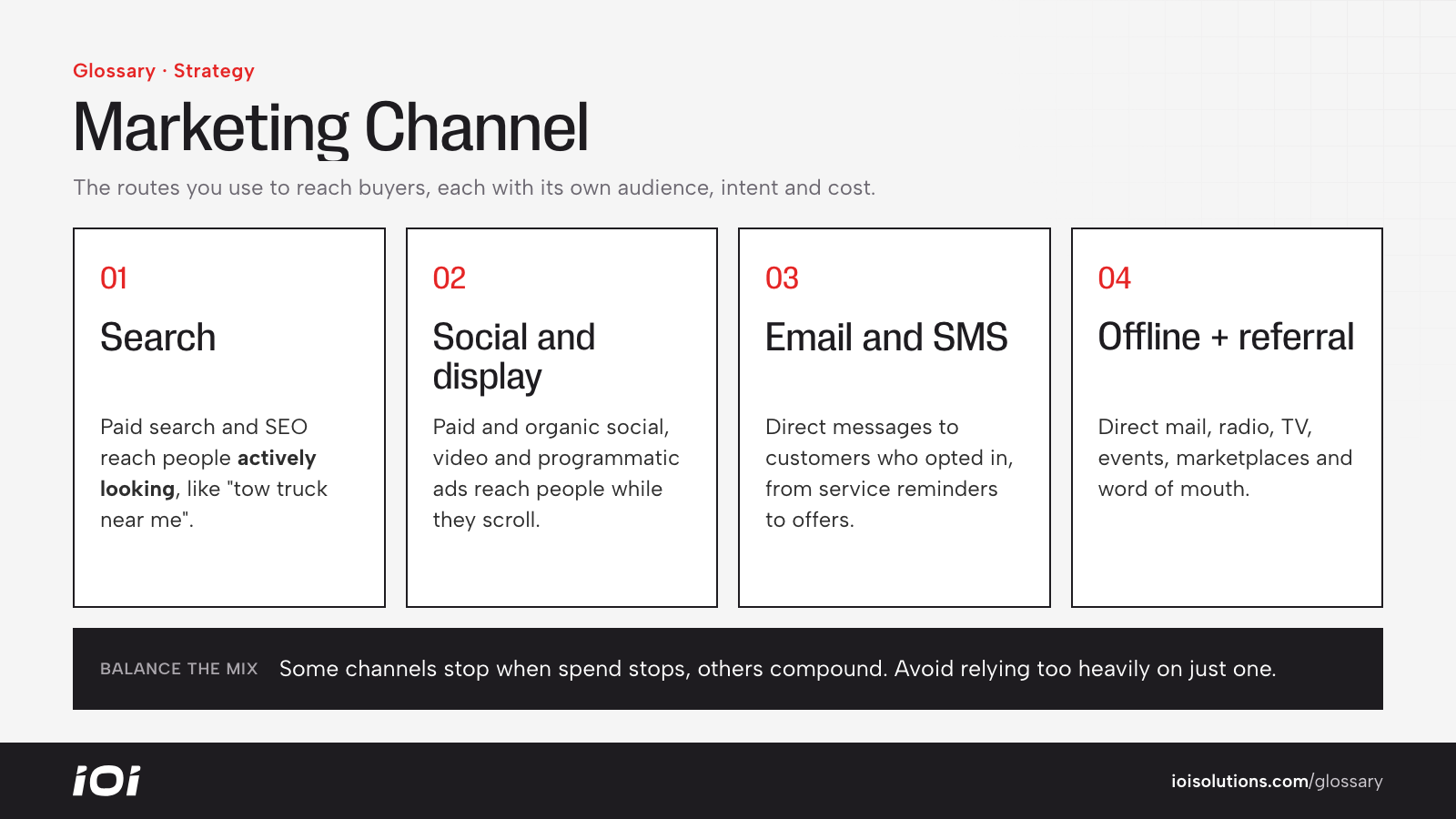
A marketing channel is any path you use to get your message in front of potential customers and bring them to you. Search engines, social media platforms, email, websites, video, display networks, text messaging, direct mail, radio, TV, events, and referral partners are all marketing channels.
The term is sometimes used more broadly to include distribution channels, the routes a product travels to reach buyers, such as retailers or marketplaces. In digital marketing, though, it usually refers to the places and methods used to reach and convert an audience.
Why Marketing Channels Matter
Each channel reaches different people at different moments with different intent. Someone searching “tow truck near me” is in a very different mindset from someone scrolling a social feed. Picking the right mix of channels lets you meet customers where they already are and match your message to their situation.
Channel choices also affect cost, speed, and scalability. Some channels deliver quick results but stop when spending stops. Others take longer to build but compound over time. A healthy plan balances both and avoids depending too heavily on one channel.
Types of Marketing Channels
- Paid search: Ads on search engines that target people actively looking for something, a core part of search engine marketing.
- Organic search: Unpaid rankings from SEO, plus local listings and maps.
- Paid social: Ads on platforms like Meta, TikTok, YouTube, and LinkedIn.
- Organic social: Content published on your own social accounts.
- Email and SMS: Direct messages to people who have opted in.
- Display and programmatic: Banner and video ads across websites and apps.
- Marketplaces and listing sites: Third-party platforms where buyers browse inventory or services.
- Offline: Direct mail, radio, TV, billboards, events, and print, as well as other forms of direct marketing.
- Referral and partnerships: Word of mouth, affiliates, and business partners.
Channels are often grouped as owned (your website and email list), earned (reviews, press, word of mouth), and paid (advertising). Owned and earned channels build long-term assets, while paid channels let you turn volume up or down quickly. Most growing businesses need all three working together.
Marketing Channels in Automotive Marketing
- Dealerships: Paid search, vehicle listing ads, social inventory ads, third-party marketplaces, email to past customers, and OEM co-op programs often make up the mix.
- Collision shops: Google Business Profile, local search, review platforms, insurance referrals, tow operator relationships, and local social ads.
- Repair shops: Local search and maps, Local Services Ads, email and text reminders, and community sponsorships.
- Detailing, wrap, and PPF shops: Instagram, TikTok, YouTube, and Google search for high-ticket service shoppers.
- Parts and accessories ecommerce: Shopping ads, Meta and TikTok ads, YouTube install videos, marketplaces, email, and enthusiast forums.
- Automotive SaaS: LinkedIn, search, industry events, trade publications, webinars, and partnerships.
Best Practices
- Start where intent is highest. For most local automotive businesses, search and maps capture demand that already exists.
- Measure channels by outcomes. Compare cost per lead, cost per sale, and return on spend, not just clicks.
- Understand each channel’s role. Some channels create demand, others capture it. Judge them accordingly using a sensible attribution model.
- Avoid single-channel dependence. Platform changes can disrupt results overnight.
- Keep messaging consistent. A coordinated, omnichannel approach builds recognition across touchpoints.
- Test new channels carefully. Start with a defined budget, a clear test period, and success criteria before scaling.