
What Is a Digital Marketing Strategy?
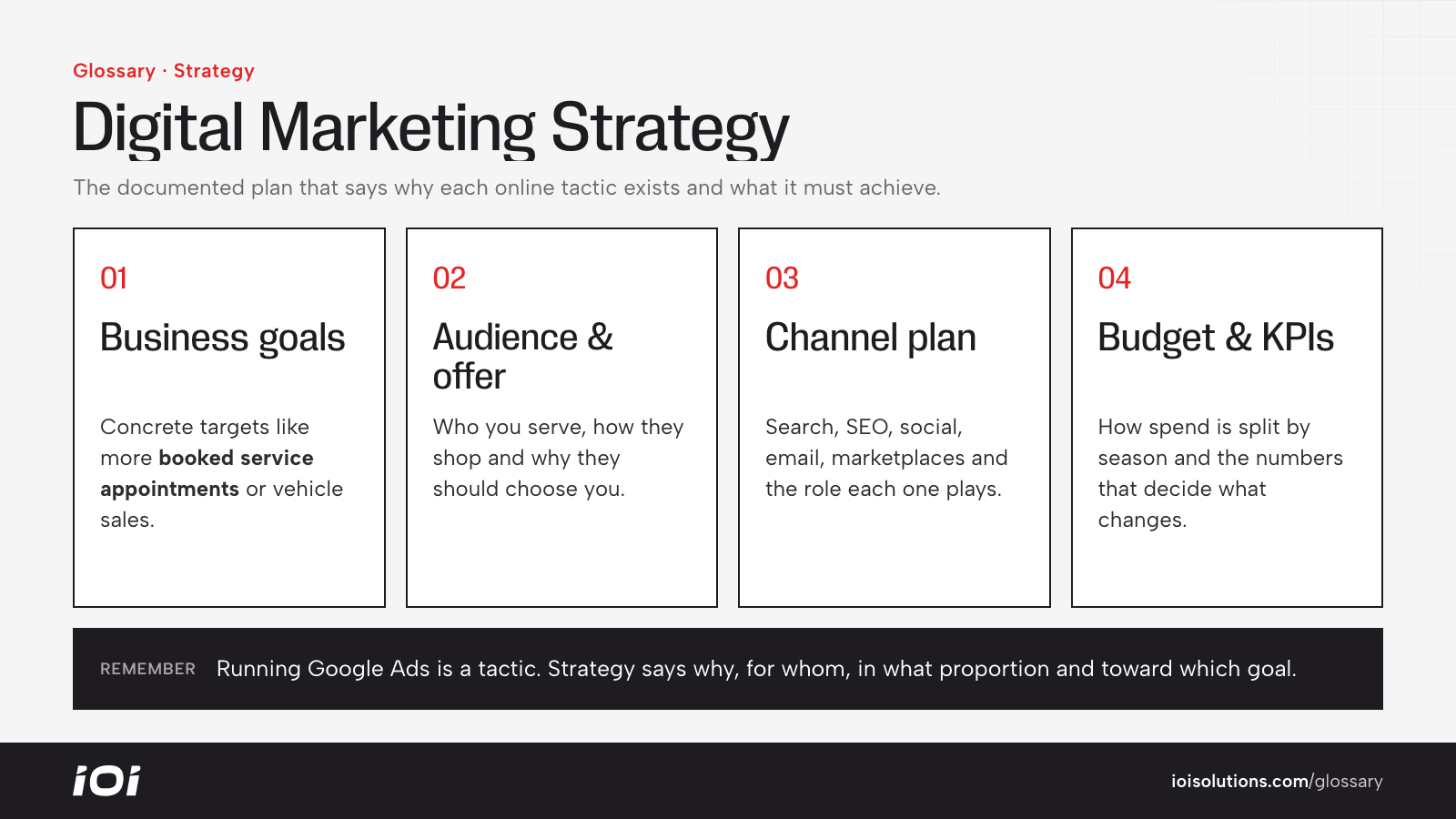
A digital marketing strategy is a documented plan that explains how a business will use online channels to hit specific goals. It answers the core questions: who you are trying to reach, what you want them to do, which channels and messages you will use, how much you will spend and how you will measure success.
A strategy is not the same as a list of tactics. Running Google Ads, posting on Instagram and sending emails are tactics. The strategy explains why those tactics, in what proportion, aimed at whom and toward which outcome.
Why a Digital Marketing Strategy Matters
Without a strategy, marketing tends to drift toward whatever is new or whatever a vendor is selling. Spend gets spread thin, channels do not support each other and nobody can say which efforts are working.
- Focus. A strategy puts budget and effort behind the channels most likely to move your goals.
- Accountability. Clear KPIs let you judge performance objectively.
- Consistency. Messaging and branding stay aligned across search, social, email and your website.
- Adaptability. A documented plan makes it easier to see what to change when results or markets shift.
How a Digital Marketing Strategy Works
Most effective strategies include these components:
- Business goals. Concrete targets such as more booked service appointments, more vehicle sales or higher online revenue.
- Audience definition. A clear target audience, including needs, objections and how they shop.
- Positioning and offer. Why customers should choose you, stated plainly.
- Channel plan. Which marketing channels you will use, such as search ads, SEO, social, video, email, marketplaces or local listings, and the role each plays.
- Content and creative. The messages, formats and assets each channel needs.
- Budget and timeline. How spend is allocated and how it may shift by season.
- Measurement. Tracking setup, KPIs, reporting cadence and how decisions will be made from the data.
Strategies should be revisited regularly. Quarterly reviews are common, with smaller adjustments made as campaign data comes in.
Digital Marketing Strategy in Automotive Marketing
Automotive businesses have distinct shopping patterns, so their strategies look different:
- A dealership might combine inventory-driven search and vehicle listing ads, marketplace listings, social video for new models, email to past buyers and service retention campaigns. Strategy decides how to balance new, used and service goals.
- A collision shop might focus heavily on local SEO, its Google Business Profile, reviews and emergency-intent search ads, plus relationships that drive insurer and agent referrals.
- A parts ecommerce brand might prioritize Shopping campaigns, product SEO, fitment-friendly product pages, enthusiast content and email flows for repeat purchases.
- An automotive SaaS company might build around targeted B2B paid social, educational content, webinars and demo-focused landing pages.
For example, a multi-location tire and repair chain could decide that its strategy is to own local search in every market, use seasonal paid campaigns ahead of winter, and build an email and text program that brings first-time customers back for their next service.
Best Practices
- Start with goals, not channels. Pick the business outcome first, then choose channels that serve it.
- Write it down. A one-to-two-page plan that everyone can reference beats a strategy that lives in someone’s head.
- Fix tracking early. Make sure calls, forms and sales can be tied back to sources before scaling spend.
- Integrate channels. Plan how search, social, email and your website hand prospects to each other.
- Plan for seasonality. Weather, tax season, model-year changes and holidays all affect automotive demand.
- Review and adjust. Set a regular cadence to compare results against goals and reallocate budget.