
What Is Below the Fold?
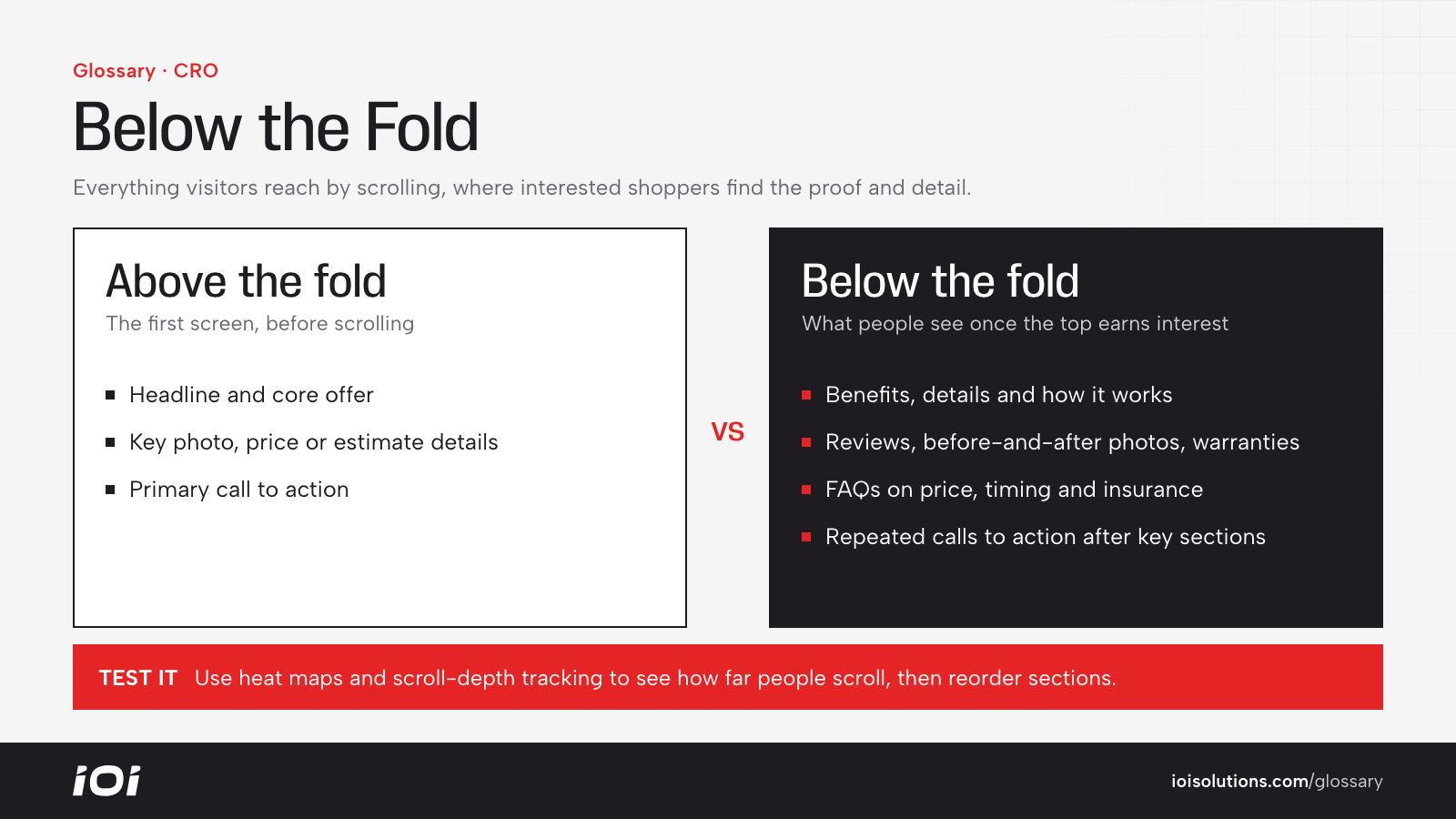
Below the fold refers to everything on a web page or email that isn’t visible until the visitor scrolls. It’s the counterpart to above the fold, the first screen visitors see. The term borrows from newspapers, where less prominent stories ran on the bottom half of the folded front page.
On the web the fold isn’t fixed. It shifts with screen size, device and browser, so content that is below the fold on a phone may be visible right away on a large monitor.
Why Below the Fold Matters
A common myth is that nobody scrolls, so everything important must be crammed into the first screen. In reality, people scroll readily when the top of the page earns their interest, especially on mobile where scrolling is natural. The below-the-fold area matters because it:
- Answers the questions and objections that come up after the first impression.
- Holds the proof that builds confidence, such as reviews, photos, warranties and certifications.
- Gives search engines and AI tools more relevant, in-depth content to understand the page.
- Gives serious buyers the detail they need to commit.
That said, attention does decline as people scroll, so content placement should follow priority.
How Below the Fold Works
Think of a page as a conversation that follows the visitor’s questions in order. After the first screen sets up the offer, below-the-fold sections typically include:
- Benefits and details: What’s included, how it works and why it’s better.
- Social proof: Reviews, testimonials, ratings and before-and-after photos.
- Process: Simple steps showing what happens after someone takes action.
- FAQs: Answers to common questions about price, timing, warranty and insurance.
- Repeated calls to action: Buttons placed after key sections so visitors don’t have to scroll back up.
Tools like a heat map and scroll-depth tracking show how far people actually scroll and where they lose interest, so you can reorder sections based on real behavior. Lazy-loading images below the fold also helps the first screen load faster.
Below the Fold in Automotive Marketing
- Dealership vehicle pages: Photos, price and the main buttons belong up top. Below the fold, include features, history reports, payment calculators, warranty information and dealership reviews.
- Collision shop pages: After the estimate button, explain the insurance claim process, OEM certifications, lifetime warranties, rental car help and real repair photos.
- Repair shop service pages: Describe warning signs, what’s included in the service, estimated time and customer reviews mentioning that specific repair.
- Parts product pages: Put specifications, full fitment details, installation guides, videos and reviews below the main purchase area.
- Detailing and PPF pages: Use package comparisons, galleries, care instructions and coating warranty details to support the quote request.
For example, a tire shop landing page might show the offer and a booking button first, then scroll into a tire brand lineup, a “how it works” section, a short FAQ and a second booking button.
Best Practices
- Give a reason to scroll. The first screen should create interest and hint that more useful information follows.
- Order sections by importance. Put the most persuasive proof and answers first, and fine print last.
- Repeat the call to action. Place buttons after major sections and consider a sticky button on mobile.
- Use clear headings. Scanners should be able to jump to the section they care about.
- Measure scroll behavior. Use scroll tracking and heat maps to find where visitors drop off, then test changes.
- Keep it fast. Lazy-load heavy media so long pages don’t slow down.