
What Is a Monroney Sticker (Window Sticker)?
The Monroney sticker is the official label affixed to the window of every new car sold in the United States. It is named after Senator Mike Monroney, who sponsored the Automobile Information Disclosure Act of 1958, the law that requires it.
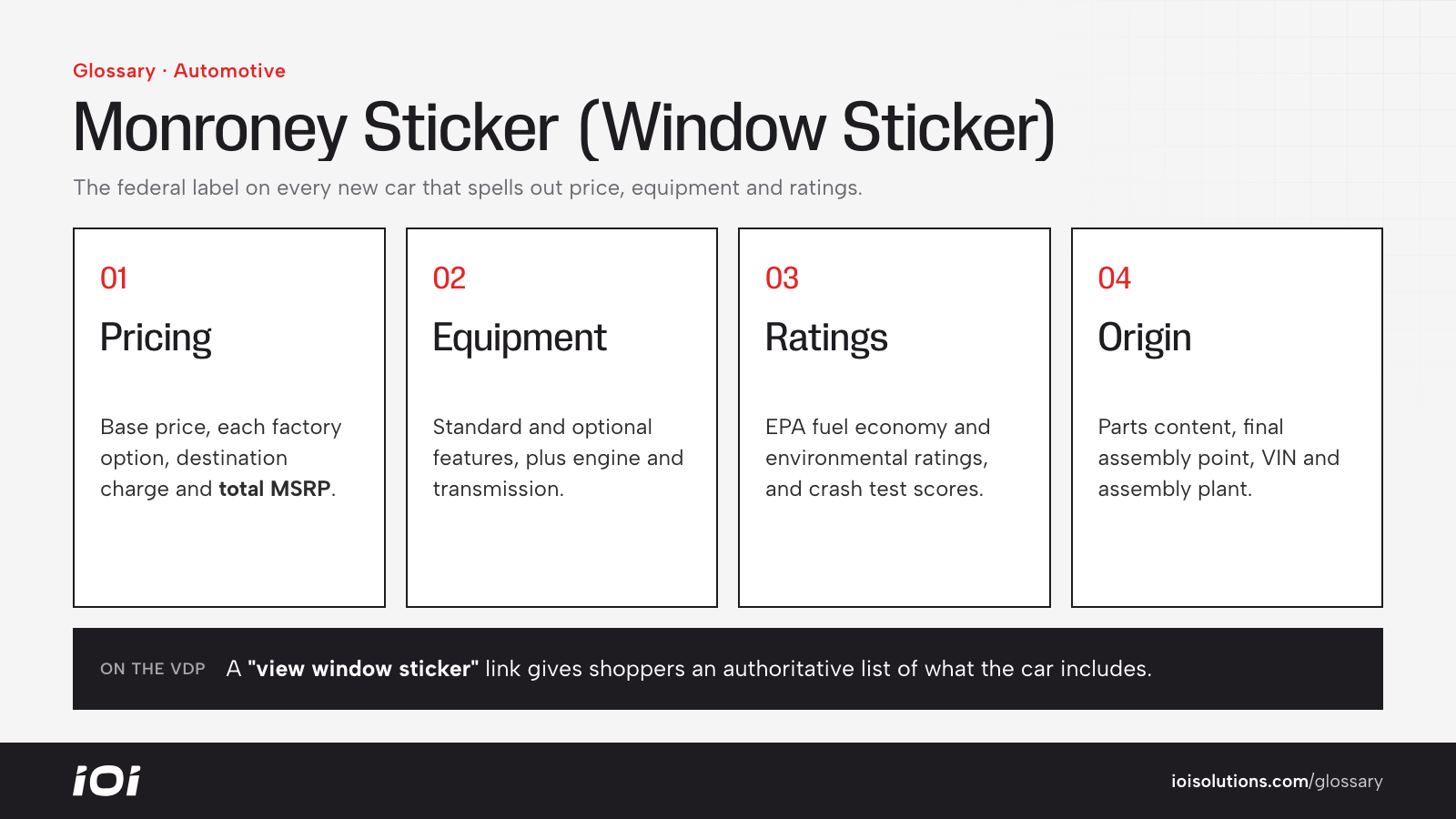
The label gives shoppers a standardized, manufacturer-supplied summary of the vehicle. It typically includes:
- The base price and the price of each factory-installed option
- The destination and delivery charge
- The total MSRP
- Standard and optional equipment
- Engine and transmission details
- EPA fuel economy and environmental ratings
- Government crash test ratings, when available
- Parts content and final assembly information
- The VIN and assembly plant
The sticker must stay on the vehicle until it is sold to the consumer. Removing or altering it before sale is prohibited by federal law.
Why the Monroney Sticker Matters
The window sticker exists to protect buyers by making pricing and equipment transparent. For the industry, it is also:
- The official source of truth for what a new car includes and what the manufacturer suggests it should cost.
- A starting point for negotiation. Shoppers compare the sticker to the dealer’s selling price, incentives, and any added items.
- A trust tool. Showing the real sticker helps shoppers verify that an online listing matches the car on the lot.
Dealers often add a second label, called an addendum, next to the Monroney. Addendums list dealer-installed accessories, protection packages, or market adjustments. They are not part of the federal label and should never be presented as if they were.
Used cars do not carry a Monroney sticker after the first sale. Instead, dealers must display the FTC Buyers Guide, which covers warranty status.
How the Monroney Sticker Works
The manufacturer generates the sticker when the vehicle is built, using the vehicle’s configuration and the pricing and rating data required by law. It is applied at the factory or port and travels with the car to the dealer.
Digital copies are now widely available. Many manufacturers and data providers let dealers retrieve a PDF or image of the original window sticker using the VIN, and this is especially useful for used cars, where the sticker reveals the original options and packages.
How the Monroney Sticker Affects Marketing
For dealers, the window sticker is one of the most useful pieces of content on a vehicle detail page.
Shoppers want to know exactly what a car includes. A “view window sticker” link answers that question with an authoritative document, which can increase time on page and lead submissions. For used inventory, linking the original sticker highlights valuable packages that a generic description might miss.
For example, a dealer selling a three-year-old truck might discover through the original sticker that it has a premium towing and technology package. Calling that out in the listing title and photos gives shoppers a clear reason to choose that truck over similar ones.
Advertising must stay consistent with the sticker. If an ad promotes a price relative to MSRP, the MSRP should match the label, and any dealer add-ons should be disclosed clearly rather than buried. Many states have rules on how vehicle prices and add-ons can be advertised.
Best Practices
- Link the sticker on every new VDP. Make it easy to open on mobile.
- Pull original stickers for used cars. Use them to surface packages and options buyers value.
- Keep addendums separate and clear. Label dealer-added items plainly and do not blend them into MSRP.
- Match ads to the label. Make sure advertised MSRP and equipment match the actual sticker.
- Use sticker data in descriptions. Feed option and package details into listing copy and inventory ads.