
What Is Digital Transformation?
Digital transformation is the ongoing effort to use technology to change how a business works, from internal processes to the customer experience. It goes beyond swapping paper for software. True transformation rethinks workflows, roles and offerings around what digital tools make possible.
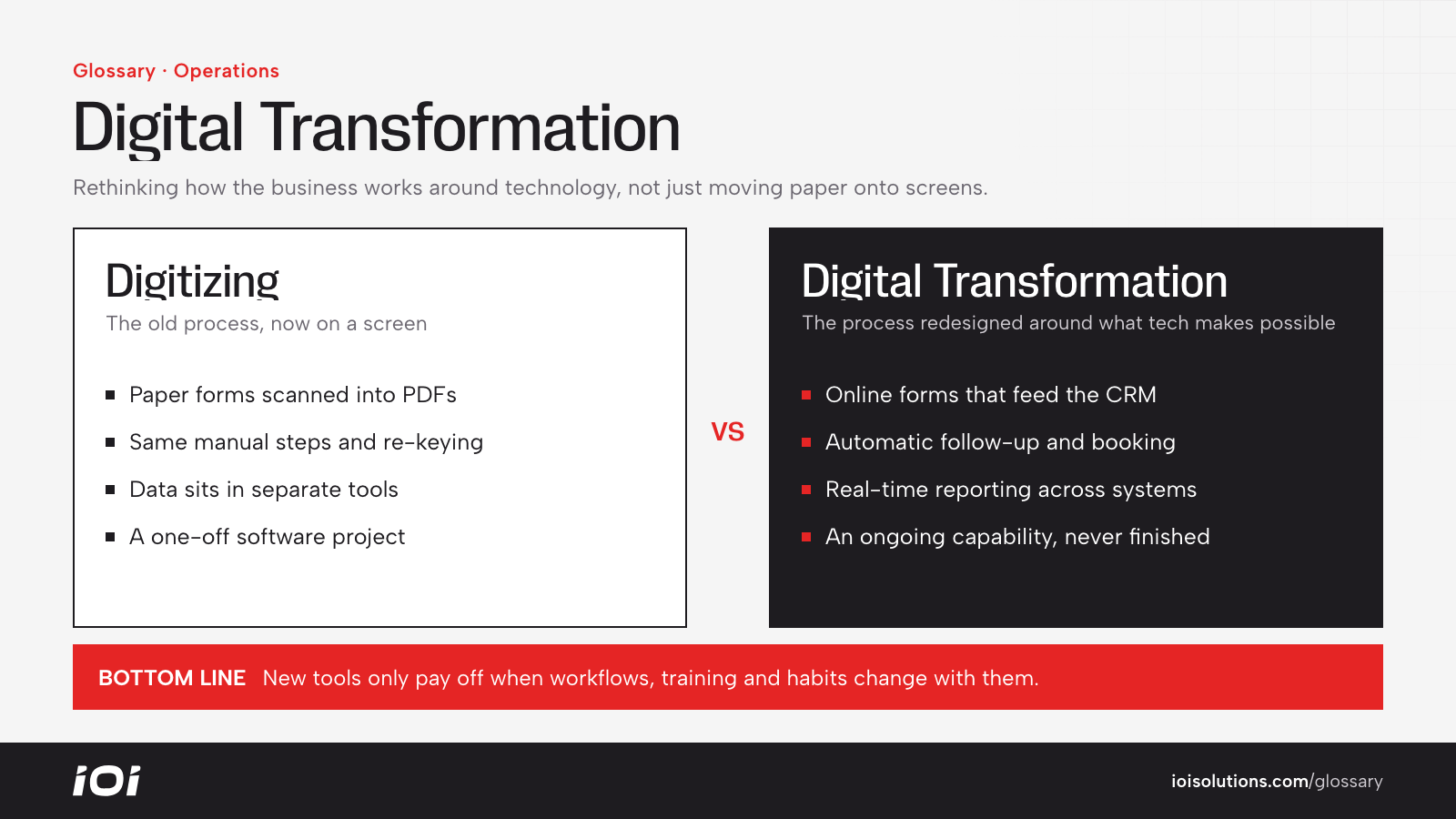
A business that simply scans its paper forms into PDFs has digitized. A business that replaces the forms with an online process that feeds directly into its CRM, triggers automatic follow-up and reports results in real time has transformed that workflow.
Why Digital Transformation Matters
Customer expectations are shaped by the best digital experiences they have anywhere. If they can book a restaurant, order groceries and track a package from their phone, they expect similar convenience from every business they deal with.
- Customer experience. Online scheduling, transparent pricing, digital payments and real-time updates reduce friction.
- Efficiency. Automation removes repetitive manual work and reduces errors.
- Better decisions. Connected systems produce data you can actually use.
- Competitive position. Businesses that adapt early often set the standard that slower competitors must chase.
How Digital Transformation Works
Transformation usually happens in stages rather than all at once:
- Assess the current state. Map existing processes, tools and pain points for customers and staff.
- Prioritize opportunities. Pick changes with clear impact on revenue, cost or customer satisfaction.
- Choose and integrate tools. Select platforms, often SaaS products, that connect cleanly with existing systems.
- Redesign workflows. Change how people work, not just which software they open.
- Train and support teams. Adoption depends on people understanding and trusting the new process.
- Measure and iterate. Track outcomes and keep improving.
Transformation is never really finished. Customer habits and available tools keep changing, so the most successful organizations treat it as a capability they build over time rather than a single project with an end date. Leadership commitment matters as much as the technology itself, because new tools only deliver value when processes, incentives and habits change with them.
For marketing, transformation often includes marketing automation, integrated CRMs, unified reporting, online booking and checkout, and aligning teams through approaches like revenue operations.
Digital Transformation in Automotive Marketing
The automotive industry has seen significant change in how customers shop and buy:
- Dealerships have adopted digital retailing tools that let shoppers estimate payments, value a trade, apply for credit and even complete much of the purchase online. Marketing must then drive people into those tools and track them through to sale.
- Service departments and repair shops use online scheduling, digital inspections with photos and video, text-based approvals and online payments.
- Collision repair shops use photo-based estimating, digital status updates and integrated estimating and shop management systems.
- Parts sellers have moved toward ecommerce with structured fitment data, marketplace integrations and automated inventory feeds.
For example, a repair shop that adds online booking connected to its shop management system can run ads that drive directly to appointments, send automatic reminders and attribute booked revenue to specific campaigns. That is a marketing improvement made possible by an operational change.
Best Practices
- Start with customer pain points. Fix the moments where customers get frustrated or drop off.
- Integrate before you add. A few connected systems beat many disconnected tools.
- Get buy-in from staff. Involve the people who will use new processes in designing them.
- Move in phases. Deliver early wins to build momentum rather than attempting everything at once.
- Protect data quality. Clean, consistent data is what makes automation and reporting reliable.
- Measure business outcomes. Judge success by revenue, efficiency and satisfaction, not software adoption alone.