
What Is Digital Retailing?
Digital retailing is the set of online tools and processes that let a shopper complete part or all of a vehicle purchase without sitting at a desk in the dealership. It typically includes building a deal, estimating payments, valuing a trade-in, applying for credit, choosing protection products, and scheduling pickup or home delivery.
The goal is not always a fully online sale. Many shoppers want to do the math and paperwork online, then finish with a test drive and signature in person. Digital retailing gives them that choice.
Why Digital Retailing Matters
Car shoppers do most of their research online, and they increasingly expect to transact online too.
- Shopper preference. Many buyers want to avoid long hours in the showroom and prefer to work through numbers at their own pace.
- Better leads. A shopper who has selected a vehicle, valued a trade, and chosen a payment has shown far more intent than someone who asked “is this available?”
- Faster deals. When much of the deal is done online, the in-store visit is shorter and more efficient.
- Transparency. Clear pricing, payments, and fees build trust.
How Digital Retailing Works
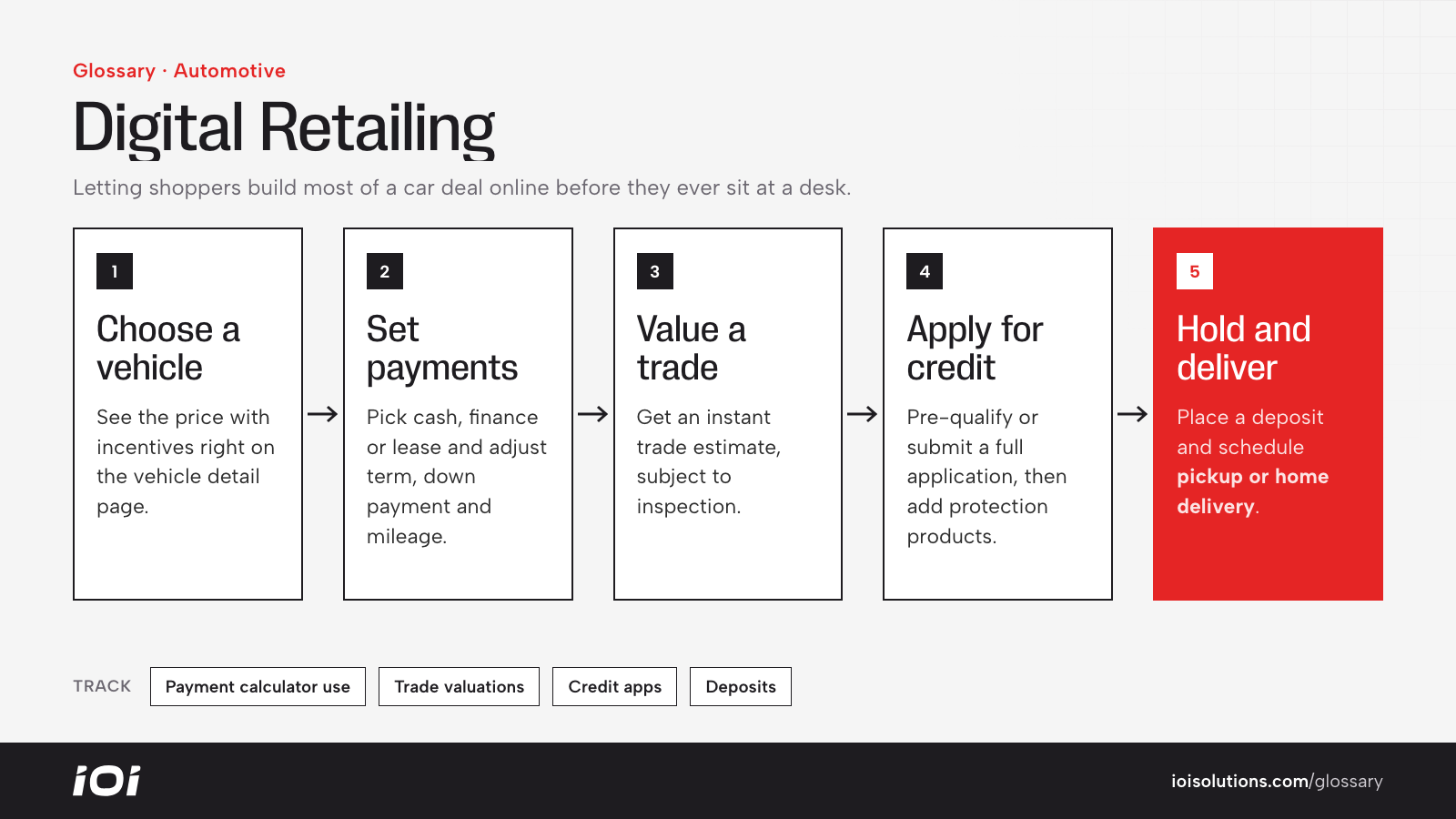
Most digital retailing tools plug into the dealer’s website, especially the vehicle detail page. A typical flow:
- Choose a vehicle and see the price with incentives.
- Pick cash, finance, or lease and adjust term, down payment, and mileage.
- Value a trade with an instant estimate.
- Get pre-qualified or submit a full credit application.
- Add protection products such as service contracts or GAP, often with simple explanations.
- Place a deposit or hold the vehicle.
- Schedule pickup or delivery and, where state law allows, complete paperwork electronically.
Behind the scenes, the deal should flow into the CRM and desking tools so salespeople and the F&I office can pick up where the shopper left off.
How Digital Retailing Affects Marketing
Digital retailing changes what marketers measure and how they build campaigns.
First, it creates new conversion points. Instead of only tracking form submissions, a dealer can track payment calculator use, trade valuations, credit applications, and deposits. Each step can be sent to ad platforms as a conversion event, giving bidding algorithms better signals about who is serious.
Second, it improves landing page performance. Ads that send shoppers to a VDP with clear payments and a “start your deal” button usually convert better than ads that send traffic to a generic inventory page.
For example, a dealer running campaigns for a popular SUV could promote “see your real payment in two minutes” and send clicks directly to the deal builder. Shoppers who start a deal but do not finish can be retargeted with reminders about the exact vehicle and payment they configured.
The biggest risk is a broken handoff. If a shopper builds a deal online and then is asked to start over in the showroom, trust drops sharply. Marketing promises must match the in-store process.
Best Practices
- Keep the numbers honest. Show real prices, fees, and payment assumptions so online deals hold up in the store.
- Track every step. Measure engagement with each tool and feed meaningful steps back to ad platforms.
- Connect to your CRM. Make sure partial and completed deals reach salespeople instantly.
- Train the floor. Staff should continue online deals, not restart them.
- Optimize for mobile. Most shoppers start on a phone, so test every step on small screens.
- Follow up on abandoned deals. Use email, text, and retargeting to bring shoppers back to their saved deal.