
What Is Anchor Text?
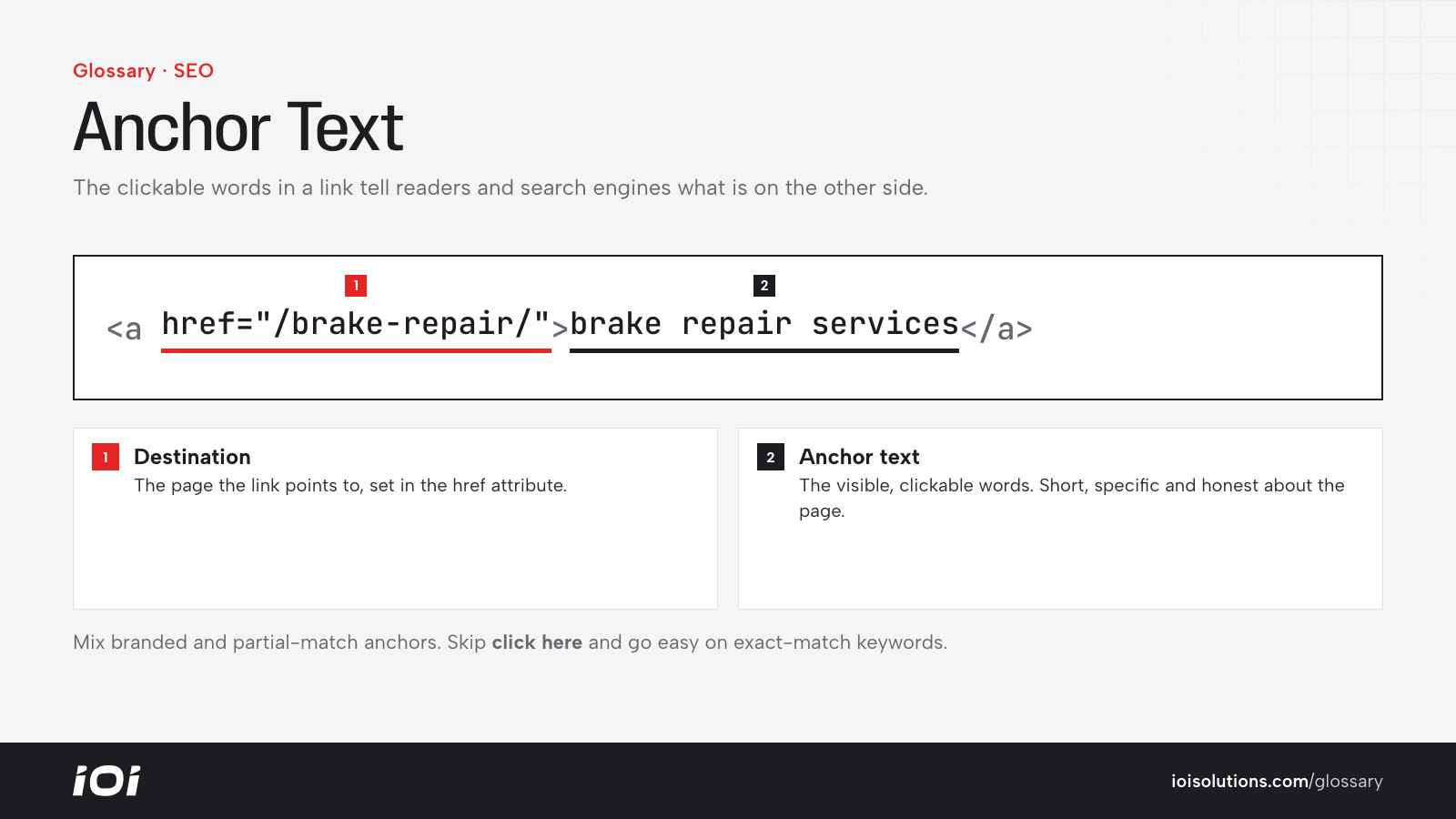
Anchor text is the clickable words in a link. In a sentence like “learn more about our brake repair services,” the italic words are the anchor text. In HTML, it is the text between the opening and closing link tags, while the destination address sits in the href attribute.
Anchor text gives context. It tells a reader what to expect when they click, and it gives search engines a clue about what the destination page covers. Good anchors are short, specific and honest about where the link goes.
Why Anchor Text Matters
Search engines use links to discover pages and understand how they relate. The words used to link to a page act as a short description of it. When many relevant pages link to you with descriptive anchors, it reinforces what your page is about.
Anchor text also matters for people. Clear, descriptive links make content easier to scan, improve accessibility for screen-reader users who navigate by links, and set accurate expectations so visitors don’t bounce after clicking.
There is a risk side too. Search engines watch for manipulation, and an unnatural pattern of exact-match keyword anchors, especially from paid or low-quality backlinks, can look like an attempt to game rankings.
Types of Anchor Text
- Exact match: The anchor is the exact keyword the page targets, such as “ceramic coating Phoenix.”
- Partial match: Includes the keyword plus other words, such as “our ceramic coating packages in Phoenix.”
- Branded: Uses the business or brand name, such as “Smith Collision Center.”
- Naked URL: The address itself is the link text.
- Generic: Phrases like “click here” or “read more,” which give little context.
- Image anchors: When an image is linked, its alt text acts as the anchor, which is one more reason to write good image alt text.
Natural link profiles contain a mix of these. Branded and partial-match anchors usually make up a large share for healthy local businesses, with exact match used sparingly.
Anchor Text in Automotive Marketing
You control anchor text completely on your own site, so internal links are the best place to use it well.
- Dealerships: A blog post comparing two SUVs can link to new inventory pages with anchors like “new Highlander inventory” instead of “click here.”
- Repair shops: A general services page can link to each service using descriptive anchors such as “transmission repair” and “check engine light diagnostics.”
- Collision shops: An insurance claims guide can link to the estimate request page with “get a free collision estimate.”
- Parts brands: Buying guides can link to category pages with anchors like “cold air intakes for the F-150.”
For links from other sites, such as local news, sponsorships, supplier directories or car club pages, you usually can’t control the wording, and you shouldn’t try too hard. A sponsor listing that says your shop’s name is perfectly healthy.
Best Practices
- Be descriptive. Anchors should tell the reader exactly what they’ll find on the other side.
- Keep it concise. A few words is usually enough. Avoid linking whole sentences.
- Vary your wording. Use natural variations rather than the same exact keyword every time.
- Avoid “click here.” Generic anchors waste an opportunity to add context.
- Don’t buy keyword-rich links. Paying for exact-match anchors violates search engine guidelines and can backfire.
- Link to relevant pages. The anchor and the destination should clearly match.