
What Is Fitment Data (ACES and PIES)?
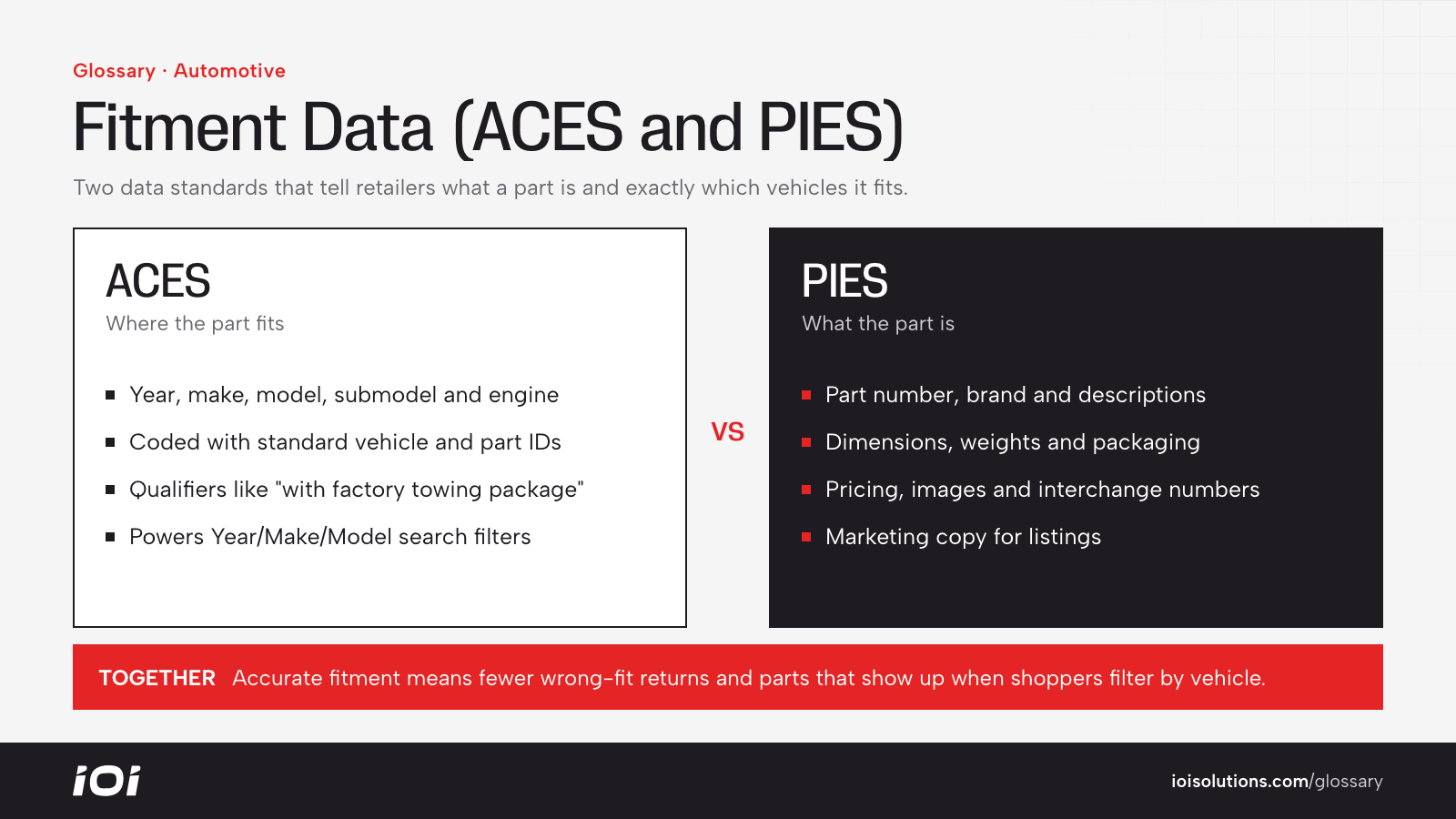
Fitment data is structured information that says which vehicles a part fits. In the North American auto parts industry, it is usually exchanged using two standards maintained by the Auto Care Association:
- ACES (Aftermarket Catalog Exchange Standard) describes vehicle applications: the year, make, model, submodel, engine, and other attributes a part fits. It relies on reference databases, including a vehicle configuration database and a parts category database, so everyone describes vehicles and part types the same way.
- PIES (Product Information Exchange Standard) describes the product itself: part number, brand, descriptions, dimensions, weights, packaging, pricing, images, interchange numbers, and marketing copy.
Together they tell a retailer or marketplace what the product is and exactly where it fits.
Why Fitment Data Matters
Parts buyers have one main fear: ordering something that does not fit. Accurate fitment data addresses that fear directly.
- Fewer returns. Wrong-fit orders are a major source of returns and lost margin for parts sellers.
- Distribution. Many retailers, warehouse distributors, and marketplaces expect ACES and PIES files from brands before they list products.
- Search visibility. Fitment powers Year/Make/Model search on websites and marketplaces. If your parts lack fitment, they often do not appear when a shopper filters by their vehicle.
- Conversion. A clear “this fits your vehicle” confirmation reduces hesitation at checkout.
How Fitment Data Works
A brand typically builds and maintains its catalog like this:
- Map applications. Product teams research which vehicles each part fits, using OEM data, measurements, and test fitting.
- Code to the standard. Each application is coded using standard vehicle and part type IDs rather than free text, so a “2018 F-150 5.0L” means the same thing everywhere.
- Add product attributes. PIES records add specs, images, descriptions, and pricing.
- Validate. Files are checked against the reference databases for errors and conflicts.
- Distribute. Files go to retailers, distributors, data aggregators, and marketplaces, and are refreshed as new model years are added.
Fitment notes and qualifiers handle the details, such as “with factory towing package” or “excludes sport suspension.”
How Fitment Data Affects Marketing
For aftermarket and parts ecommerce brands, fitment data is not just an operations file. It is the foundation of nearly every marketing channel.
On your own store, fitment drives vehicle selectors, filtered category pages, and vehicle-specific landing pages. Those pages can target searches like “brake pads for 2016 Silverado,” which is often where high-intent traffic lives. Strong ecommerce SEO for parts sellers depends on generating these pages from clean data rather than writing them by hand.
In paid media, fitment lets you build shopping feeds and ad groups by vehicle. For example, a performance exhaust brand could run separate campaigns for each popular truck platform, with ad copy and landing pages that name the exact vehicle. That relevance tends to lift click-through and conversion compared with generic “fits most trucks” messaging.
Fitment also shapes retargeting and email. If a shopper saved their vehicle in a “my garage” tool, you can recommend only parts that fit, which feels helpful rather than random.
Poor data has the opposite effect. Missing applications mean lost visibility, and wrong applications lead to returns, bad reviews, and wasted ad spend.
Best Practices
- Treat fitment as a product. Assign ownership, budget, and a review schedule rather than handling it as a one-time task.
- Add new model years quickly. Early fitment coverage for new vehicles captures demand before competitors.
- Use qualifiers carefully. Clear notes prevent wrong-fit orders on vehicles with multiple configurations.
- Show fit confirmation on the page. Display a clear “fits your vehicle” message on each product detail page.
- Build landing pages from data. Use fitment to create vehicle-specific category pages for search and ads.
- Audit returns. Tag wrong-fit returns and use them to fix catalog errors.