
What Is a White Paper?
A white paper is a detailed, research-backed document that explores a specific problem, explains its causes and impact, and presents a recommended approach for solving it. White papers are more formal and substantial than a blog post, typically running several pages, and they are written to inform decision-makers rather than to sell directly.
The format began in government, where official reports explained policy positions. In marketing, white papers became a staple of B2B and technology companies, where buyers need to justify purchases to colleagues and want solid information before talking to a salesperson.
Why White Papers Matter
A strong white paper does several jobs at once:
- Establishes authority. It shows you understand the buyer’s problem in depth.
- Generates leads. White papers are often gated behind a short form, making them a reliable lead generation asset.
- Supports complex sales. Buyers can share it internally with decision-makers who never visit your site.
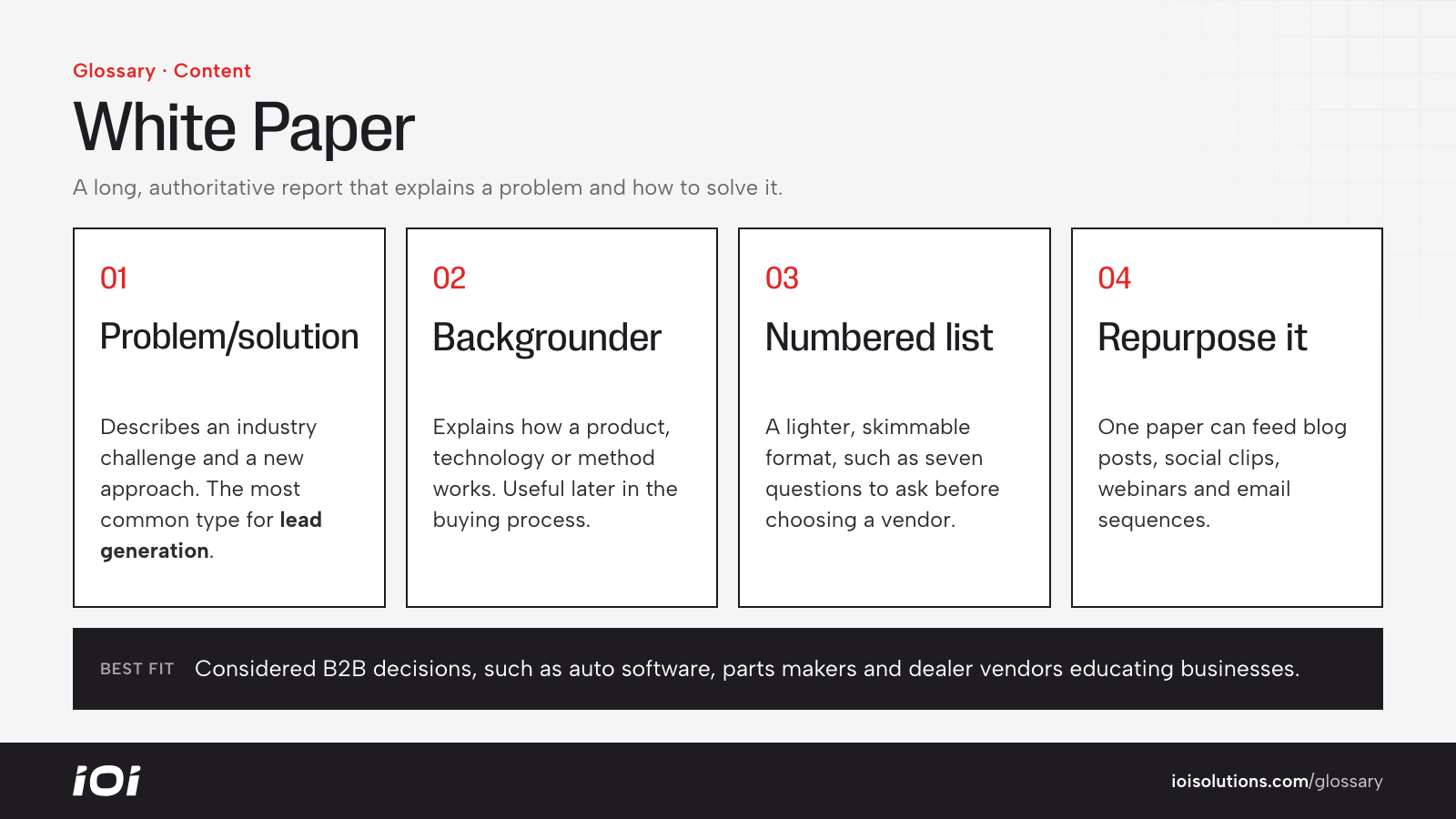
- Feeds other content. One white paper can be repurposed into blog posts, social clips, webinars and email sequences.
- Earns citations. Original insights are more likely to be referenced by publications and AI search tools.
Types of White Papers
Most white papers fall into one of three formats:
- Problem and solution: describes an industry challenge and lays out a new approach. This is the most common type for lead generation.
- Backgrounder: explains the technical details or benefits of a product, technology or methodology. Useful later in the buying process.
- Numbered list: a lighter format such as “Seven questions to ask before choosing a vendor,” easier to skim and share.
A typical structure includes an executive summary, a description of the problem, supporting evidence, the proposed solution, practical steps or a framework, and a short conclusion. Any data cited should come from your own research or credible, clearly referenced sources.
White Papers in Automotive Marketing
White papers make the most sense where buyers face a considered, often business-to-business decision:
- Automotive software and SaaS companies can publish papers on topics like reducing repair cycle times, improving fixed operations profitability or preparing for EV service demand.
- Parts manufacturers and distributors can create technical papers for shops and fleet buyers on product testing, durability or installation standards.
- Dealer groups and vendors can share frameworks on digital retailing, BDC processes or inventory management with other businesses in the industry.
- Collision networks can explain ADAS calibration requirements to insurers or fleet managers.
Consumer-facing shops rarely need formal white papers. A detailed buyer’s guide usually serves car owners better. For example, a scheduling software company targeting independent repair shops could publish a paper on how missed calls affect bay utilization, then promote it through content syndication and LinkedIn ads.
Best Practices
- Pick one specific problem. Narrow topics produce sharper, more useful papers.
- Use real evidence. Cite your own data or reputable sources; never invent statistics.
- Keep it educational. Limit product pitching to a short section near the end.
- Design for skimming. Use clear headings, summaries and visuals so busy readers can find key points.
- Gate thoughtfully. Ask only for the information you need, and follow up with relevant nurture content.
- Promote it actively. Plan distribution through email, paid social, partners and sales outreach.
- Measure what happens next. Track how many downloads become sales conversations and revenue, not just how many forms are filled, so you know whether the topic attracted the right buyers.