
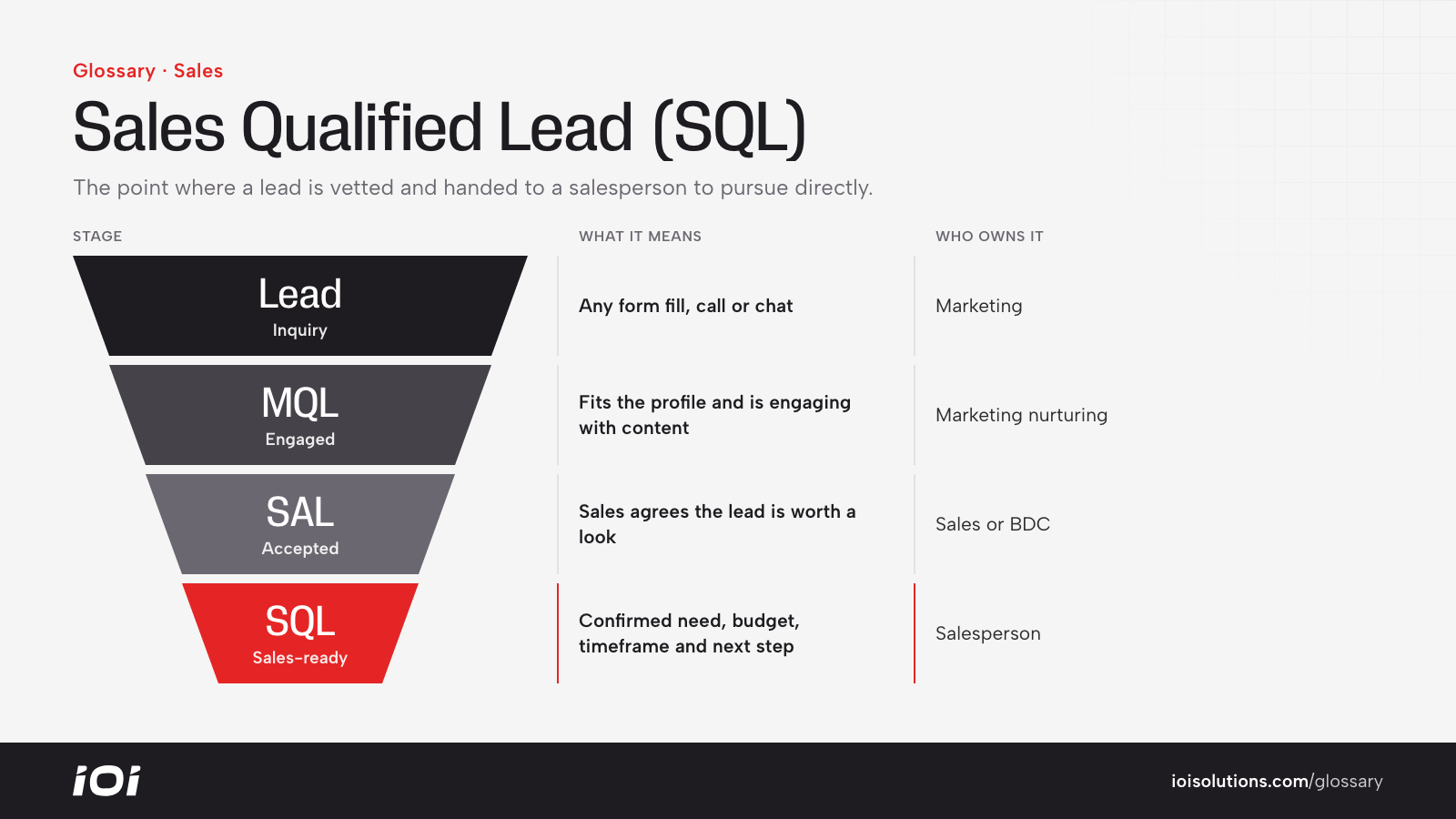
What Is a Sales Qualified Lead (SQL)?
A sales qualified lead, or SQL, is a prospect that has been reviewed and judged ready for a direct sales conversation. They fit the profile of a good customer, have a real need, and have shown clear buying intent. At this stage, the lead moves from marketing nurturing into active pursuit by a salesperson.
SQLs sit later in the funnel than marketing qualified leads (MQLs). A typical progression is: lead, then MQL, then sales accepted lead (SAL), then SQL, then opportunity and customer. Not every business uses every stage, but the idea is consistent: each step adds more confidence that the person will buy.
Why Sales Qualified Leads Matter
Salespeople have limited time. If they chase every inquiry, high-intent prospects wait while low-intent ones absorb attention. The SQL stage protects sales time and gives both teams a clear standard.
- It focuses sales effort on prospects most likely to close.
- It creates accountability between marketing and sales.
- MQL-to-SQL and SQL-to-close rates reveal where the funnel leaks.
- SQL counts are a better predictor of revenue than raw lead volume.
How a Lead Becomes an SQL
Qualification Criteria
Teams define the conditions that make a lead sales-ready. Frameworks like BANT (budget, authority, need, timeline) or others focused on pain and decision process help structure this.
Discovery Conversation
Often a sales development rep, BDC agent or front-desk staffer contacts the lead to confirm details: what they need, when, their budget, and who decides.
Scoring and Signals
Lead scoring can flag high-intent behavior, such as requesting a quote, booking a demo or applying for financing, but most SQL decisions involve a human confirming fit.
Handoff
Once qualified, the lead is assigned to a salesperson with notes, so the next conversation picks up where the last one ended.
Sales Qualified Leads in Automotive Marketing
- Dealerships: The business development center (BDC) often performs SQL qualification. A lead becomes sales-ready when the shopper confirms interest in a specific vehicle or type, has a realistic budget or payment range, has a purchase timeframe and agrees to an appointment or a firm next step.
- Collision shops: An SQL might be a customer with confirmed damage the shop repairs, who has an open claim or is ready to pay, and wants an estimate appointment.
- Wrap shops and PPF installers: A lead becomes an SQL once the vehicle, coverage, timing and budget range are confirmed and the customer wants a formal quote.
- Automotive SaaS: An SQL is typically a dealer group or shop that has booked a demo and matches the target account profile.
For example, a dealer might count a lead as an SQL only after a BDC agent confirms a specific vehicle of interest and sets an appointment, which makes SQL numbers a much better predictor of showroom traffic than raw leads.
Best Practices
- Write a shared definition. Marketing and sales should sign off on SQL criteria together.
- Keep criteria practical. Too strict and good leads get ignored; too loose and the label means nothing.
- Respond quickly. Contact speed strongly affects whether a lead ever reaches SQL status.
- Record reasons for disqualification. They reveal targeting and messaging problems marketing can fix.
- Track conversion between stages. Watch MQL-to-SQL and SQL-to-sale rates by source.
- Feed SQL data back to ad platforms. Importing SQL events helps bidding favor sources that produce real buyers.