
What Is Multivariate Testing?
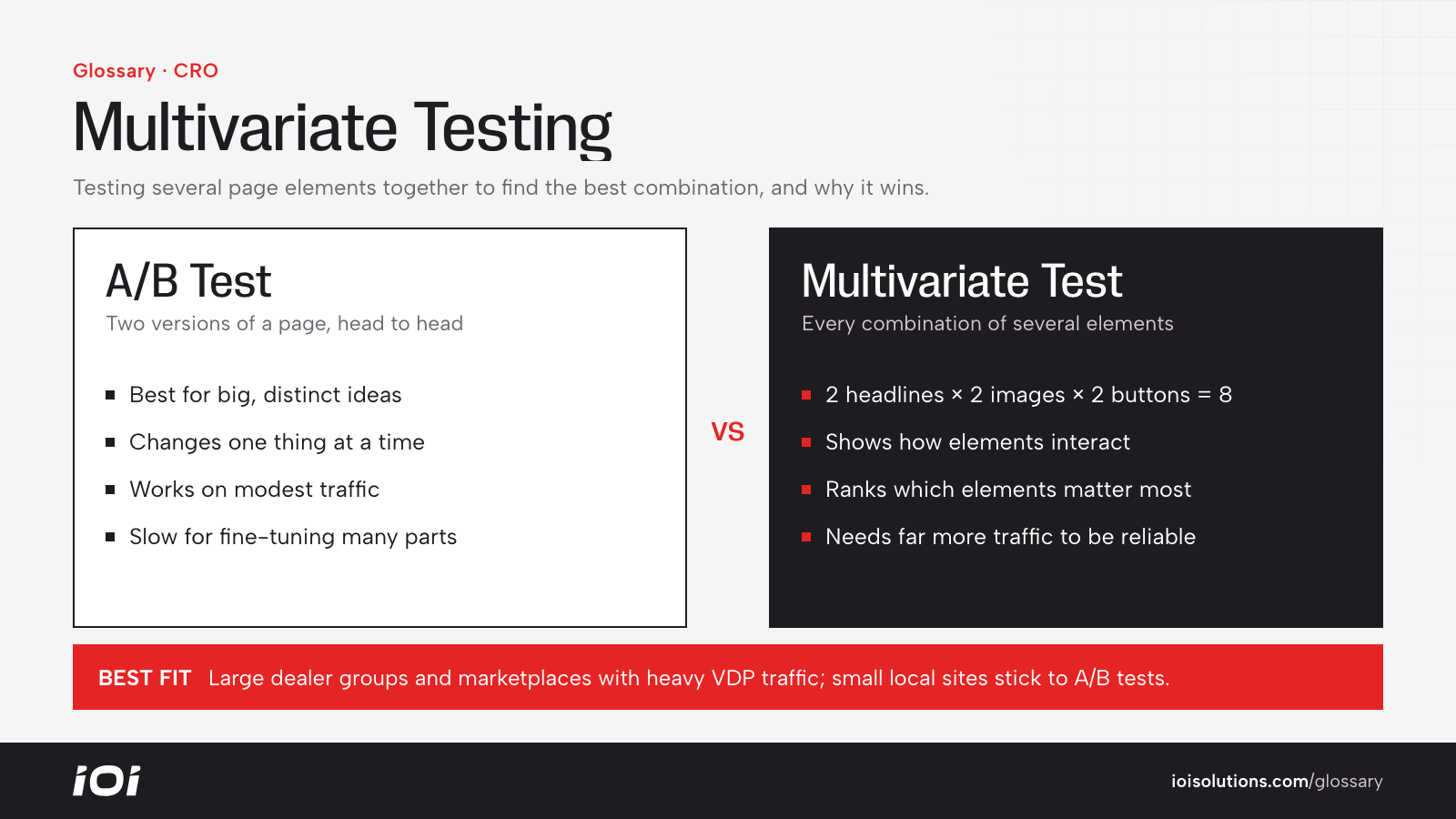
Multivariate testing (MVT) is an experimentation method that tests several page elements at the same time, in different combinations, to find which combination performs best. Instead of comparing just two versions of a page, as in an A/B test, you might test two headlines, two hero images, and two button colors together. That creates eight combinations (2 x 2 x 2), and traffic is split among all of them.
The goal is not only to find the winning combination but also to understand which individual elements have the biggest impact and how they interact with each other.
Why Multivariate Testing Matters
A/B testing, also known as split testing, is excellent for comparing big, distinct ideas. But when you want to fine-tune a page with several moving parts, testing one change at a time can take a long time. Multivariate testing lets you:
- Evaluate multiple elements in a single experiment.
- Learn how elements interact. For example, a headline might work well with one image but poorly with another.
- Identify which elements matter most, so you can focus future design work.
How Multivariate Testing Works
- Pick a page and goal. Choose a high-traffic page and a clear conversion goal, like form submissions or purchases.
- Select elements and variations. Decide which elements to test and create versions of each.
- Build combinations. A full factorial test runs every possible combination. Some tools use partial (fractional) designs to reduce the number of combinations needed.
- Split traffic. Visitors are randomly assigned to combinations.
- Run until results are reliable. Wait for enough conversions in each combination to reach statistical significance.
- Analyze effects. Look at the best combination and at each element’s contribution.
The main drawback is traffic. Because visitors are divided among many combinations, multivariate tests need far more traffic than A/B tests to produce trustworthy results. Doubling the variations of one element doubles the number of combinations.
Multivariate Testing in Automotive Marketing
Because of its traffic requirements, multivariate testing suits larger automotive sites better than small local businesses:
- Large dealer groups and marketplaces: A group with heavy traffic to vehicle detail pages could test combinations of photo gallery layout, price display style, and call-to-action wording to see which combination produces the most leads.
- Parts and accessories ecommerce: A high-volume store might test product page combinations of fitment confirmation messaging, shipping badges, and review placement to improve add-to-cart rates.
- Automotive SaaS: A software company with steady traffic could test demo request page headlines, form length, and social proof placement together.
For an independent repair shop or single-location body shop, traffic is usually too limited for reliable multivariate tests. Those businesses typically get better results from simple A/B tests on their most important landing pages, combined with qualitative insights from tools like heat maps and session recordings.
Best Practices
- Make sure you have enough traffic. Estimate required sample sizes before starting. If the numbers don’t work, run an A/B test instead.
- Limit the number of variations. Fewer elements and versions mean faster, more reliable results.
- Test meaningful changes. Tiny tweaks rarely produce detectable differences.
- Don’t stop early. Early leaders often fade. Run the test through full business cycles, including weekdays and weekends.
- Use a primary conversion metric. Focus on the outcome that matters, like leads or revenue, rather than clicks.
- Follow up with confirmation. Validate the winning combination with a simpler A/B test against the original if stakes are high.