
What Is a Meta Description?
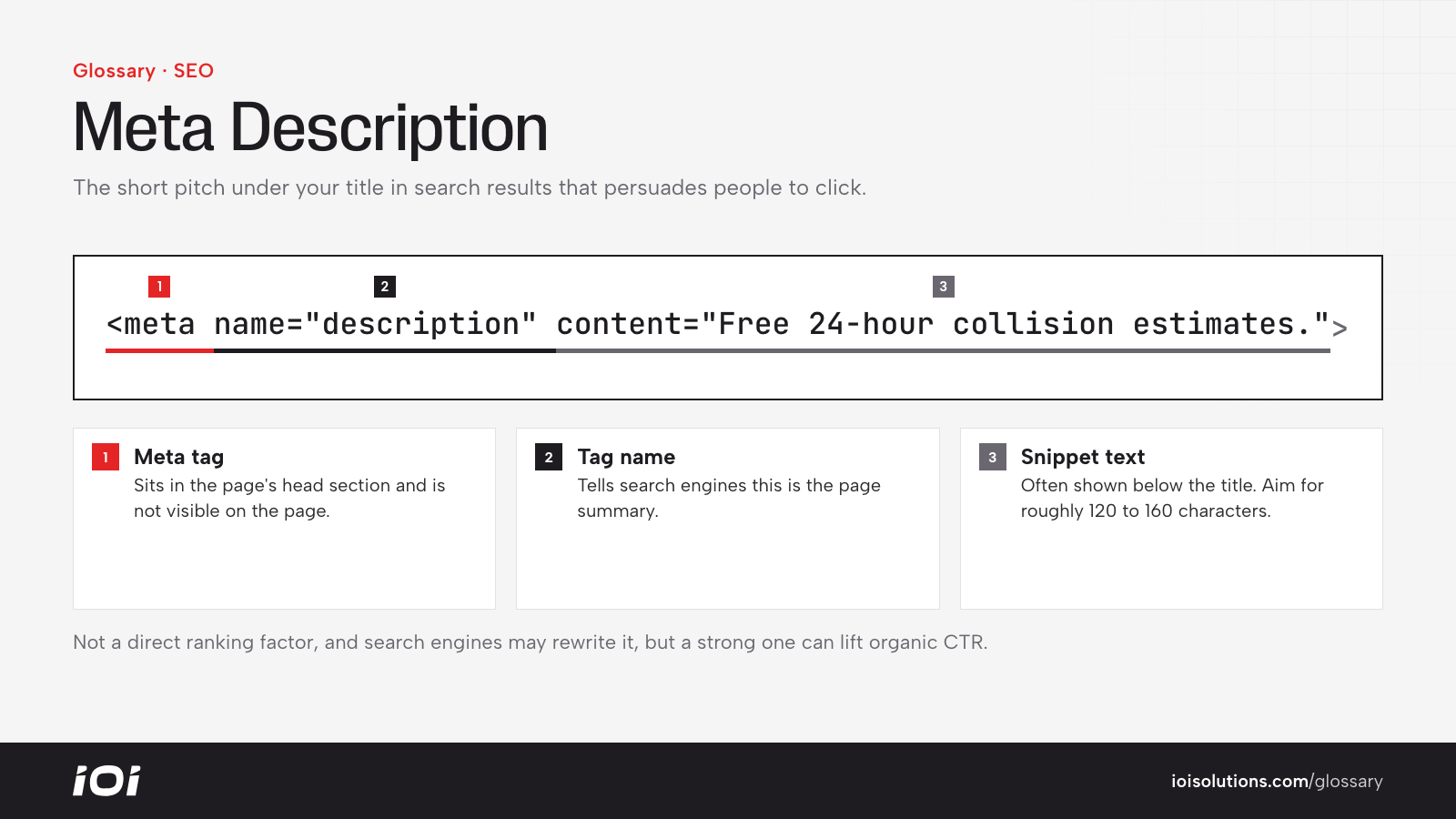
A meta description is a short summary of a web page written into the page’s HTML code. It isn’t visible on the page itself. Instead, search engines may display it as the snippet of text below the page title and URL on a search engine results page (SERP). Think of it as a short ad for your page in organic search results.
Search engines don’t always use the meta description you write. If they think another passage from the page better matches the searcher’s query, they may pull that text instead. Still, a well-written meta description is often used and gives you some control over how your page is presented.
Why Meta Descriptions Matter
Meta descriptions are not considered a direct ranking factor. Their value lies in influencing clicks. When someone sees your listing alongside nine others, the description helps them decide which result is worth visiting. A clear, relevant, compelling description can improve your organic click-through rate, bringing in more traffic from the same rankings.
Meta descriptions also show up in other places, such as social media link previews when no dedicated social tags are set, and they can influence how AI-driven search tools summarize your page.
How Meta Descriptions Work
The meta description sits in the head section of a page’s HTML as a meta tag with the name “description” and the summary text as its content. Most content management systems and SEO plugins provide a simple field to edit it without touching code.
Search engines truncate descriptions that run too long. The cutoff is based on pixel width rather than a fixed character count, but staying roughly between 120 and 160 characters is a common guideline so the key message isn’t cut off. Mobile results may show less text than desktop.
A good meta description works alongside the title tag. The title grabs attention and signals relevance. The description adds detail and gives a reason to click.
Meta Descriptions in Automotive Marketing
- Dealerships: Model and inventory pages can mention selection, location, and a key benefit, for example, a description noting a large selection of used trucks in a specific city with financing options and trade-in appraisals available online.
- Collision shops: Service pages can highlight certifications, insurance claim assistance, warranties, and free estimates, all of which help a stressed driver choose quickly.
- Repair shops: Service-specific descriptions, such as brake repair or diagnostics, can mention same-day appointments, warranty coverage, and the neighborhoods served.
- Parts and accessories ecommerce: Product and category descriptions can include fitment, key features, and shipping details. For large catalogs, descriptions can be generated from templates using year, make, model, and product attributes, then refined for top-selling pages.
- Detailing and wrap shops: Descriptions can emphasize the finish, warranty length, and the vehicles the shop specializes in.
Duplicate meta descriptions across hundreds of inventory or product pages are a common issue on automotive sites. Unique descriptions help each page stand out and help search engines tell them apart.
Best Practices
- Write a unique description for every important page. Avoid duplicates, especially on templated pages.
- Match search intent. Describe what the searcher will actually find on the page.
- Include the main keyword naturally. Search engines often bold matching terms in the snippet, which draws the eye.
- Lead with value. Mention benefits, differentiators, or offers, like free estimates or fast shipping.
- Add a soft call to action. Phrases like “book online” or “see current inventory” encourage the click.
- Keep it accurate. Misleading descriptions may increase clicks briefly but lead to quick exits and lost trust.