
What Is Geographic Segmentation?
Geographic segmentation is the practice of grouping customers or prospects by where they are. Segments can be as broad as a country or region or as narrow as a ZIP code, a neighborhood or a radius around a store. Marketers then adjust targeting, messaging, offers and budget for each location group.
It is one of the oldest and simplest forms of market segmentation, alongside demographic, psychographic and behavioral segmentation, and it is often combined with them to define a precise target audience.
Why Geographic Segmentation Matters
Where people live affects what they need, when they need it and how far they will travel to get it.
- Efficient spend. Showing ads only where you can actually serve customers prevents wasted budget.
- Relevant messaging. Climate, local culture, regulations and competition differ by location.
- Performance insight. Comparing results by area shows where to invest more and where to pull back.
- Local search visibility. Search engines weigh proximity heavily for “near me” and local-intent searches.
How Geographic Segmentation Works
Most ad platforms and marketing tools support location targeting at several levels:
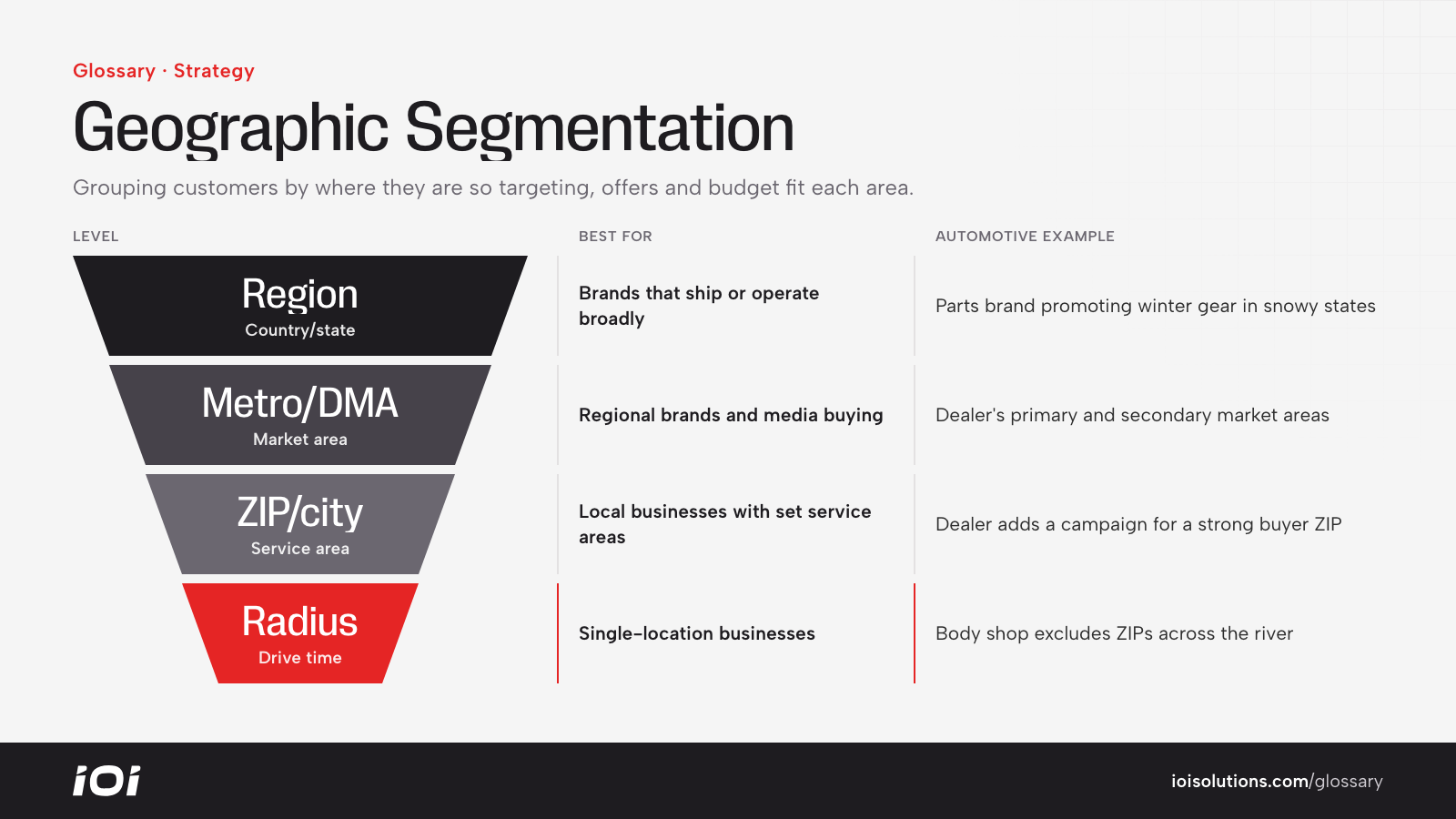
- Country, state or region for brands that ship or operate broadly.
- Designated market area (DMA) or metro area for regional brands and media buying.
- City, county or ZIP code for local businesses with defined service areas.
- Radius targeting around a specific address, useful for single-location businesses.
- Location exclusions to remove areas you do not serve or where results are poor.
Platforms such as Google Ads also let you choose whether to target people physically in a location or those showing interest in it. For most local service businesses, targeting people located in or regularly in the area is the safer choice.
Geographic data can come from ad platform reports, analytics, CRM addresses, DMS or shop management records and call tracking.
Geographic Segmentation in Automotive Marketing
Location is central to almost every automotive business:
- Repair shops, tire stores and collision centers typically draw most customers from a limited drive time. Tight radius or ZIP targeting keeps budget focused on reachable customers, and a well-optimized Google Business Profile supports local visibility.
- Dealerships often have a primary market area defined by their manufacturer, plus secondary areas where they compete for buyers. Some dealers expand their targeting for used inventory or specialty vehicles that shoppers will travel farther to buy.
- Towing companies need targeting aligned with their actual coverage and response times.
- Parts brands may shift messaging by region, such as promoting winter accessories in snowy states or off-road parts in areas with strong trail culture.
For example, a dealership might review sales by ZIP code and find that a neighboring town produces many buyers despite receiving little advertising. Adding a dedicated campaign with locally relevant messaging there could be a low-risk growth opportunity. A body shop might exclude ZIP codes across a river or highway where customers rarely make the trip.
Seasonal and weather differences also matter. A tire shop chain with locations in different climates should time winter tire campaigns by market rather than running one national schedule.
Best Practices
- Base targeting on real customer data. Map where current customers actually come from before setting radiuses.
- Use exclusions. Remove areas you cannot serve or that consistently underperform.
- Localize creative. Mention neighborhoods, landmarks or local conditions where it helps relevance.
- Adjust budgets by area. Shift spend toward locations with stronger results.
- Combine with other segments. Layer location with vehicle type, behavior or customer status for sharper targeting.
- Check location settings. Confirm ad platforms target people in your area, not just people interested in it.