
What Are Firmographics?
Firmographics are characteristics that describe organizations, much as demographics describe individual people. Common firmographic data points include industry, company size by employees, annual revenue, number of locations, geography, ownership structure, years in business and technologies used.
Firmographics are a core tool in B2B marketing because they help you decide which companies are worth pursuing and how to tailor your message to them.
Why Firmographics Matter
B2B sales cycles often involve significant time and cost, so reaching the wrong companies wastes resources quickly. Firmographics help you focus.
- Define your best-fit customers. Firmographics form the backbone of an ideal customer profile (ICP).
- Target campaigns precisely. Ad platforms such as LinkedIn allow targeting by industry and company size.
- Prioritize leads. Lead scoring often assigns points based on firmographic fit.
- Tailor messaging. A single-location business has different needs and budgets than a large multi-location group.
- Plan territories and forecasts. Knowing how many target companies exist in each segment helps size the market.
How Firmographics Work
Firmographic segmentation usually involves:
- Collecting data. From your CRM, form fields, public records, business directories, data providers and your own research.
- Analyzing current customers. Identify which firmographic traits your best, most profitable customers share.
- Building segments. Group target companies by the attributes that predict fit and value.
- Activating segments. Use them for ad targeting, account-based marketing lists, outbound prospecting and personalized content.
- Refreshing data. Companies grow, merge, move and close, so firmographic data needs regular updates.
Firmographics are often combined with technographics (the tools a company uses) and intent data (signals that a company is researching a solution) for sharper targeting.
Firmographics in Automotive Marketing
Firmographics are most relevant to businesses that sell to other automotive businesses, such as software vendors, parts distributors, equipment suppliers, marketing agencies and training providers. Useful automotive firmographic attributes include:
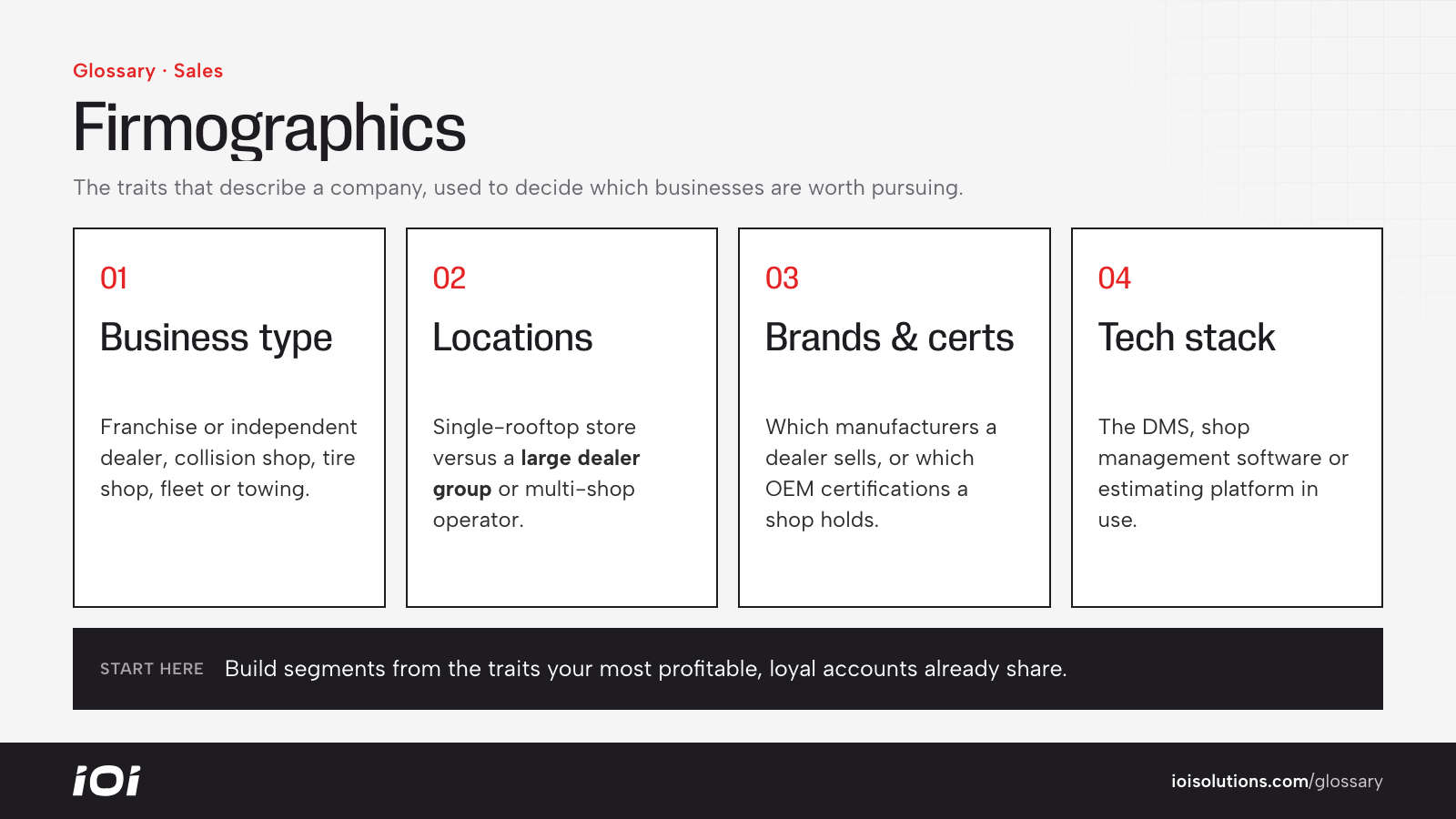
- Business type. Franchise dealer, independent dealer, collision shop, general repair, tire shop, detailer, fleet operator or towing company.
- Brands represented. Which manufacturers a dealership sells, or which OEM certifications a collision shop holds.
- Number of rooftops or locations. Single-point stores versus large dealer groups or multi-shop operators.
- Volume indicators. Estimated monthly vehicle sales, service bays or repair volume.
- Technology stack. Dealer management system, shop management software or estimating platform in use.
- Insurance relationships. For collision shops, participation in direct repair programs.
For example, a company selling ADAS calibration equipment might target collision shops above a certain size that hold specific OEM certifications, because those shops are most likely to need in-house calibration. A dealership software vendor might run separate campaigns for single-rooftop independents and large franchise groups because their decision makers, budgets and pain points differ.
Best Practices
- Start with your best customers. Base segments on the firmographic traits of accounts that are already profitable and loyal.
- Keep data current. Schedule enrichment and cleanup so targeting stays accurate.
- Combine with behavior. Pair firmographic fit with engagement and intent signals before prioritizing outreach.
- Use industry-specific fields. Generic categories are too broad; add attributes that matter in your niche.
- Personalize by segment. Create messaging, case examples and offers for each major segment.
- Avoid over-segmenting. Segments that are too small become hard to reach and measure.
Remember that firmographics describe the company, not the person you are talking to. Inside every target account, you still need to understand the individual decision makers, such as owners, general managers, service directors or marketing managers, and what each of them cares about. Pair firmographic segments with a clear buyer persona for each role so your message fits both the business and the human reading it.