
What Are Third-Party Automotive Marketplaces?
Third-party automotive marketplaces are independent websites and apps, not owned by a dealer or manufacturer, where vehicles from many sellers are listed in one place. Shoppers search by make, model, price, location and features, then contact the seller through the platform. Well-known examples in the US include large car listing sites, pricing-and-review platforms and classified marketplaces, along with social media marketplaces that accept vehicle listings.
Most marketplaces charge dealers a monthly subscription, a per-lead fee or a combination. Some also offer advertising packages, featured placement and tools for pricing, trade-ins and digital retailing.
Why Third-Party Automotive Marketplaces Matter
- Shopper reach: many car shoppers start their search on a marketplace because they can compare multiple dealers at once.
- Price transparency: marketplaces often show market-based pricing ratings, which pressure dealers to price competitively.
- Lead volume: for many dealers, marketplaces are a major source of third-party leads.
- Brand visibility: an independent shopper who never searched for a dealer by name can still discover its inventory.
- Cost: marketplace subscriptions can be among the largest line items in a dealer’s advertising budget.
How Third-Party Automotive Marketplaces Work
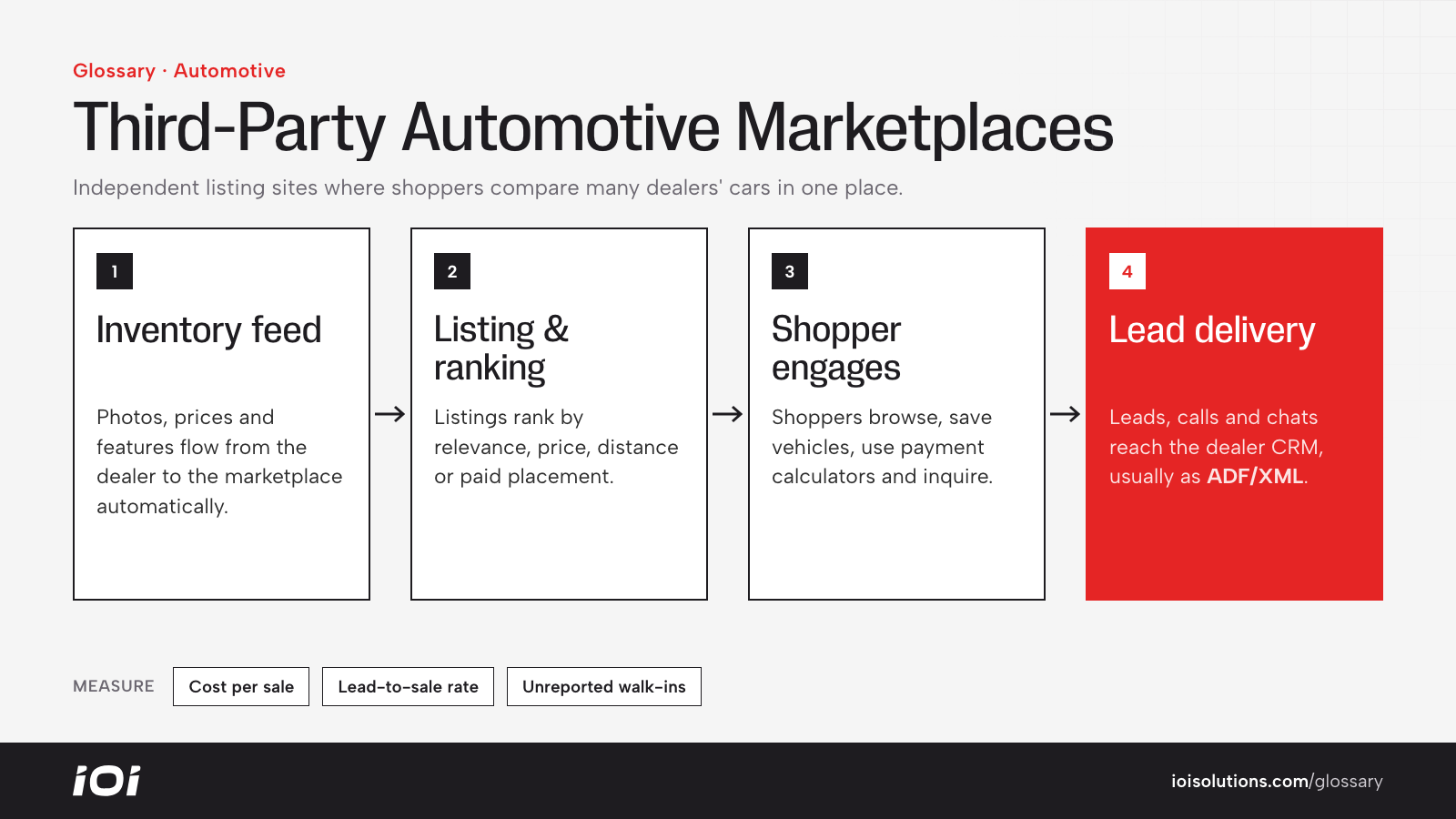
- Inventory feeds: dealers send their inventory, including photos, prices, descriptions and features, to marketplaces through automated feeds, often managed by an inventory merchandising provider.
- Listing and ranking: the marketplace displays listings, often ranking them by relevance, price, distance or paid placement.
- Shopper engagement: shoppers browse listings, save vehicles, use payment calculators and submit inquiries.
- Lead delivery: leads are sent to the dealer’s CRM, usually in ADF/XML format, along with phone calls and chats.
- Click-through: some marketplaces also send shoppers to the dealer’s own vehicle detail page.
How Third-Party Automotive Marketplaces Affect Marketing
Marketplaces are part of nearly every dealer’s marketing mix, but they should be measured as rigorously as any other channel.
- Measure cost per sale, not just cost per lead. Match marketplace leads to sales in the CRM to see what each sale actually costs from each provider, and compare that with a target cost per acquisition.
- Account for unreported influence. Many shoppers see a vehicle on a marketplace and then call or walk in without submitting a lead. Ask buyers where they first saw the vehicle.
- Merchandise every listing. Complete photo sets, accurate features and competitive pricing improve rank and response.
- Balance with owned channels. Paid search, vehicle listing ads and social campaigns build direct traffic to the dealer’s own site, where it owns the data and experience.
- Review packages regularly. Upgrading or downgrading tiers should follow performance data, not habit.
For example, a used car store paying several marketplaces might find that one produces fewer leads but a much higher close rate. Shifting budget toward that marketplace and improving merchandising there could lower the cost per sale while keeping volume steady.
Aftermarket parts sellers face a similar decision with ecommerce marketplaces: weigh reach and convenience against fees, pricing pressure and loss of direct customer relationships.
Best Practices
- Track every marketplace’s leads, calls, sales and gross in your CRM.
- Keep inventory feeds accurate and timely so sold units disappear and new units appear quickly.
- Use complete, high-quality photo sets and detailed descriptions on every listing.
- Respond to marketplace leads quickly, since shoppers often contact several dealers at once.
- Re-evaluate contracts at renewal based on cost per sale and gross, not lead count alone.