
What Is a Target Audience?
A target audience is the group of people most likely to want, need and buy what you sell, and therefore the group your marketing is designed to reach. It is usually defined by a mix of demographics, location, behaviors, interests, needs and buying stage.
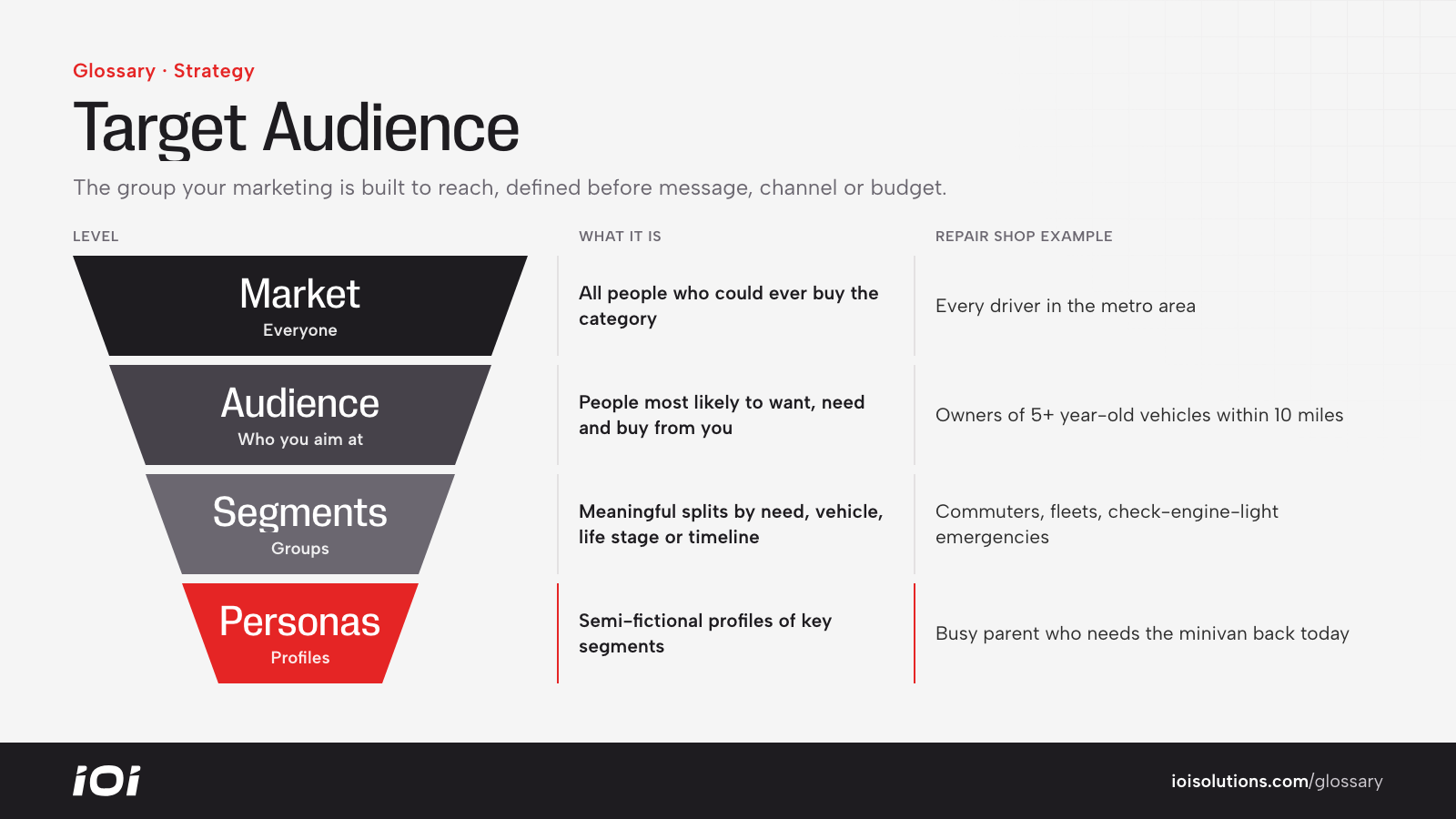
A target audience is broader than a buyer persona. The audience is the whole group you aim at; personas are semi-fictional profiles that represent key segments within it. For B2B, the company-level equivalent is the ideal customer profile.
Why a Target Audience Matters
Every marketing decision gets easier once you know who you are talking to. Message, offer, channel, timing and budget all depend on the audience. Without a defined audience, ads go to people who will never buy, creative feels generic, and costs rise.
- Clear targeting reduces wasted impressions and clicks.
- Messaging becomes more specific and persuasive.
- Channel choice becomes logical: you go where the audience already spends time.
- Results become easier to interpret because you know whom you were trying to reach.
Automated ad platforms make this more important, not less. Algorithms optimize toward whoever converts, so feeding them a clear audience definition, good conversion data and sensible exclusions keeps them from drifting toward cheap but unqualified traffic.
How to Define a Target Audience
- Study existing customers. Look at CRM, DMS or ecommerce data for patterns in location, vehicle, purchase type, order value and repeat behavior.
- Identify needs and triggers. What problem sends someone looking? An accident, a lease ending, a check engine light, a new truck purchase?
- Segment. Break the audience into meaningful groups, using factors such as geography, life stage, vehicle owned or buying timeline.
- Size and prioritize. Focus first on segments that are large enough, reachable and profitable.
- Translate into targeting. Convert the definition into platform settings: keywords, locations, interests, custom audiences, lookalikes and exclusions.
- Refine with data. Use campaign results to tighten or expand the audience over time.
Target Audience in Automotive Marketing
Automotive audiences are shaped heavily by geography, vehicle ownership and timing.
- Dealerships typically target in-market shoppers within their primary market area, current owners approaching lease maturity or high equity, and conquest owners of competing brands. Service departments target owners of the brands they sell and service.
- Collision shops target drivers within a reasonable radius who need repair now, plus insurance agents and fleet managers who can send referrals.
- Repair and tire shops target nearby vehicle owners, often with emphasis on older vehicles out of warranty.
- Aftermarket brands target owners of specific makes, models and years that their products fit, along with enthusiast communities around them.
- Detailers and PPF installers often target recent buyers of new or higher-end vehicles.
For example, a lift kit brand might define its audience as owners of specific late-model pickups and off-road SUVs in regions with strong off-road culture, then reach them with search ads, enthusiast social content and remarketing to past site visitors. A collision shop, by contrast, might care less about vehicle type and more about distance, since most drivers want a shop close to home or work and rarely travel far for repairs.
Best Practices
- Start from real customer data, not assumptions about who “should” buy.
- Define who you are not targeting, and use exclusions to protect budget.
- Build separate messaging for segments with different motivations rather than one message for everyone.
- Respect platform rules, including special ad category limits for credit-related ads, which restrict some demographic targeting.
- Revisit your audience when products, inventory or local conditions change.
- Measure performance by segment so budget follows the audiences that produce profitable customers.