
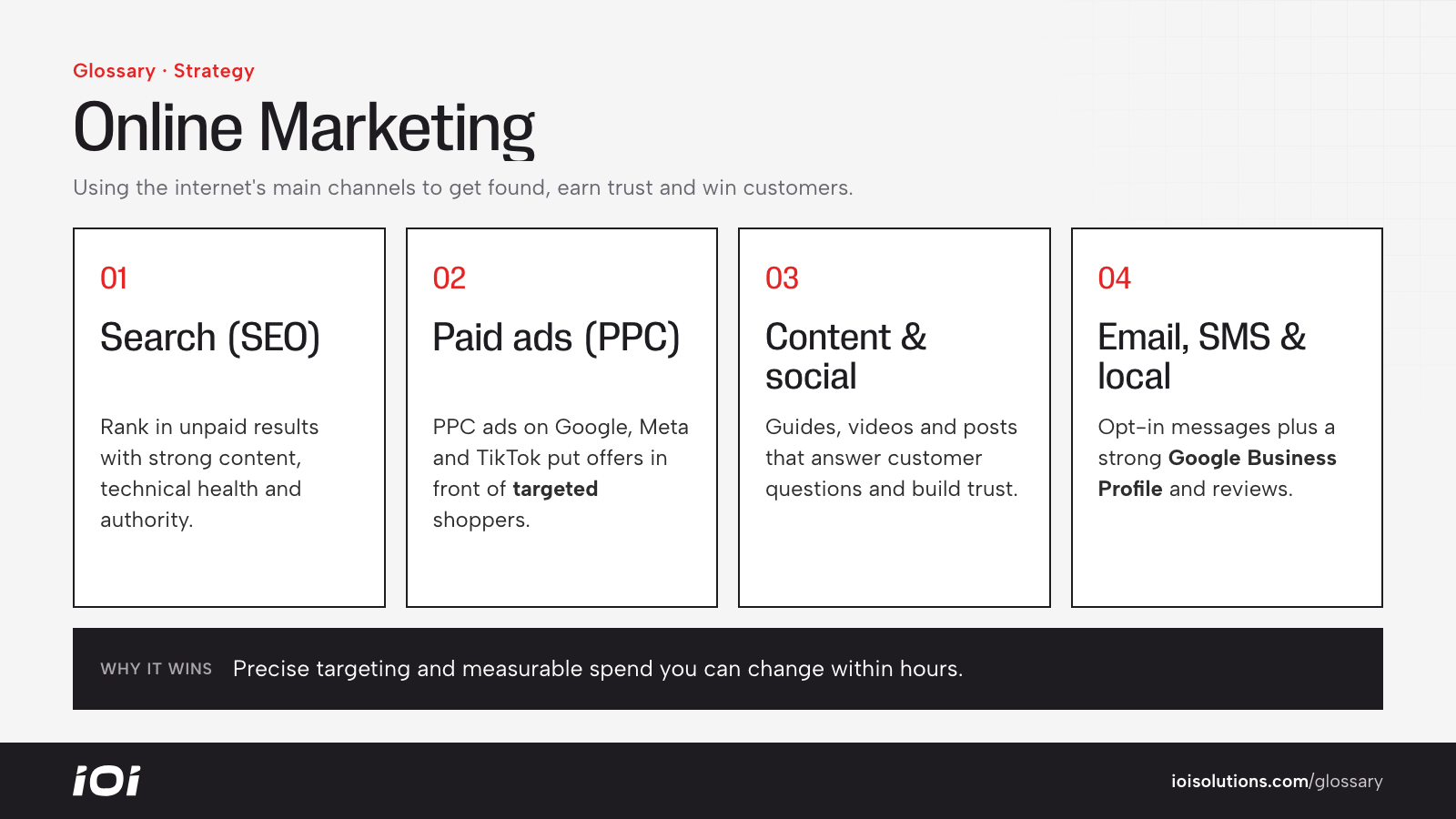
What Is Online Marketing?
Online marketing is any effort to promote a business, product or service using the internet. It covers the channels people use every day: search engines, social platforms, websites, email, online video, marketplaces and messaging apps. The goal is the same as any marketing: get the right people to notice you, trust you and take action.
The terms online marketing, internet marketing and digital marketing are often used interchangeably. Strictly speaking, digital marketing is the broader category, since it can include offline digital channels like SMS or digital billboards, while online marketing focuses on what happens over the web.
Why Online Marketing Matters
Most buying decisions now start with a search or a scroll. Even when the final transaction happens in person, buyers usually check websites, reviews and prices online first. A business that is hard to find or poorly presented online loses those buyers before it ever gets a chance to talk with them.
Online marketing also offers advantages traditional media cannot match:
- Precise targeting by location, interest, behavior and search intent.
- Measurability, so you can tie spend to clicks, leads and sales.
- Flexibility to change budgets, creative and offers within hours.
- Scalability from a small local test to a national campaign.
Types of Online Marketing
Search Engine Optimization
SEO improves your visibility in unpaid search results by strengthening your website’s content, technical health and authority.
Paid Search and Paid Social
Pay-per-click advertising on Google, Microsoft, Meta, TikTok and others puts your message in front of targeted audiences, and you pay when people engage.
Content Marketing
Articles, guides, videos and tools that answer customer questions and build trust over time.
Social Media Marketing
Organic posting and community building on platforms where your customers spend time.
Email and SMS Marketing
Direct messages to people who have opted in, used for nurturing, promotions and retention.
Local and Listings Marketing
Managing your Google Business Profile, directory listings and reviews so nearby customers can find and choose you.
Online Marketing in Automotive Marketing
Automotive businesses rely on online marketing at almost every stage of the sale.
- Dealerships use inventory-driven search ads, vehicle listing ads, social video and SEO on model and location pages to drive showroom visits and leads.
- Collision centers depend on local search, map listings and reviews, because most customers look for a shop right after an accident or after getting an insurance estimate.
- Repair and tire shops win with local SEO, service-specific landing pages and appointment booking that works well on mobile.
- Aftermarket and parts brands use shopping ads, marketplaces, product-focused content and email to sell directly to enthusiasts.
- Car shows and events use social ads and email lists to sell tickets and attract vendors.
For example, a tire shop might combine a Google Ads campaign for “tires near me,” a well-optimized Google Business Profile, and a seasonal email reminding past customers to swap to winter tires.
Best Practices
- Build on a strong website. Every online channel sends people somewhere. A fast, clear, mobile-friendly site makes every dollar work harder.
- Choose channels by intent. Use search to capture existing demand and social to create new demand. Most businesses need both.
- Track conversions properly. Set up calls, forms, bookings and purchases as conversions so you can judge channels on results, not clicks.
- Write a plan. A documented digital marketing strategy keeps channels aligned to the same goals and budget.
- Invest in reviews and reputation. Online buyers trust other buyers, especially for local services.
- Test continuously. Try new ads, offers and landing pages regularly and keep what performs.