
What Is Ecommerce SEO?
Ecommerce SEO is the practice of improving an online store so its pages appear prominently in unpaid search results for the products and categories it sells. It applies the principles of search engine optimization to the particular structure of a store: large catalogs, category hierarchies, product variants, filters, reviews and constantly changing inventory.
Where a typical business site might have a few dozen pages, a store can have thousands. That scale creates both opportunity, because each product page can rank for its own searches, and risk, because technical problems multiply quickly.
Why Ecommerce SEO Matters
Organic search can be one of the largest and most cost-effective sources of revenue for online retailers. Unlike paid Shopping and search ads, you do not pay for each click, and well-ranked pages can sell for years.
- High purchase intent. People searching for specific products, part numbers or models are often close to buying.
- Lower acquisition costs. Organic sales reduce reliance on rising ad costs.
- Compounding value. Category and product pages that earn rankings and links keep producing traffic.
- Support for paid media. Strong organic presence alongside ads increases total visibility for key terms.
How Ecommerce SEO Works
Ecommerce SEO typically covers four areas:
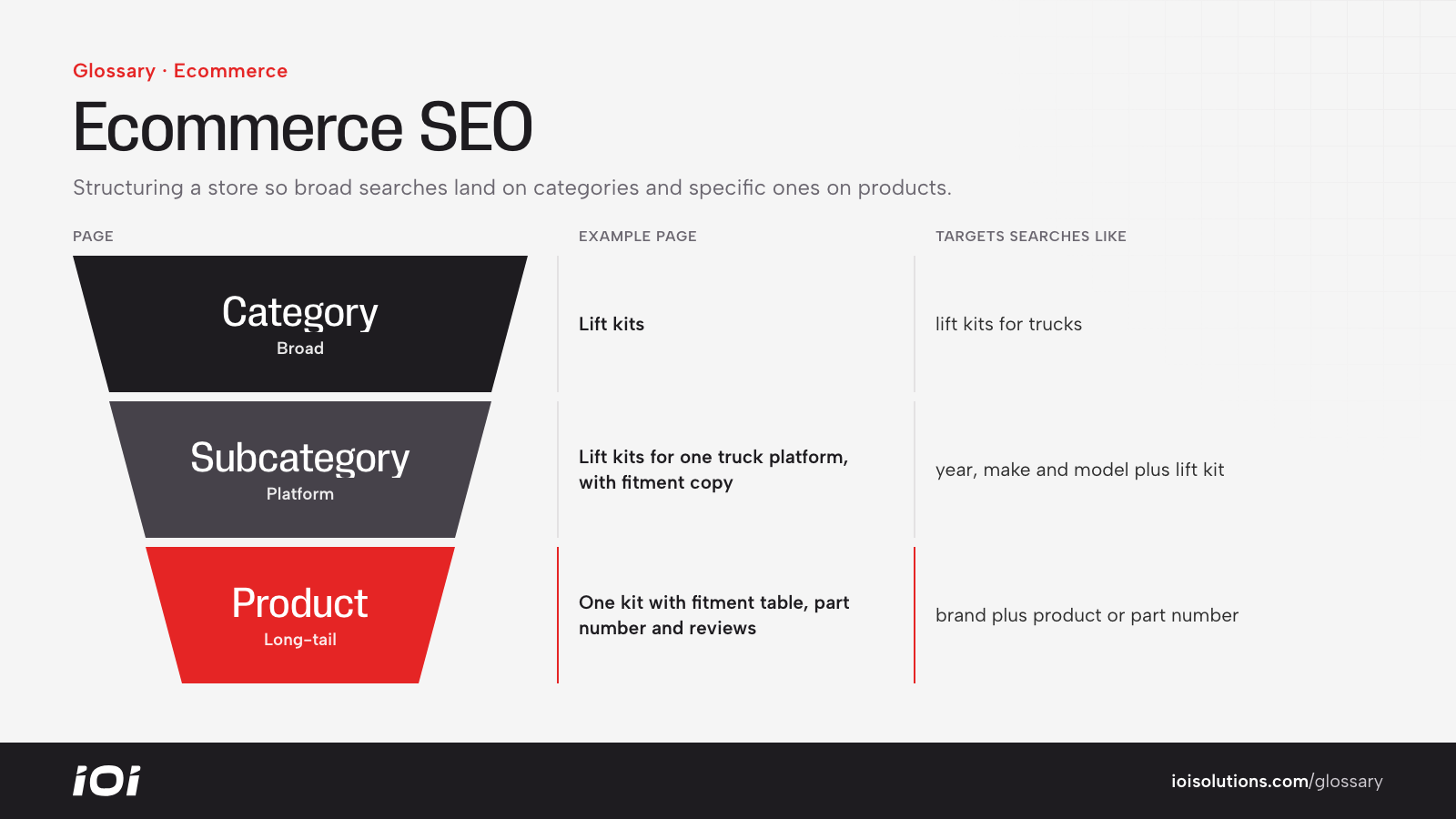
- Keyword and site structure. Map broad terms to category pages and specific, long-tail keywords to subcategories and products. Build a logical hierarchy with clear internal links.
- Technical health. Fast pages, mobile usability, clean URLs, crawl control for filters and sorting, proper canonicalization to avoid duplicate content, and handling of out-of-stock or discontinued products.
- On-page content. Unique titles, descriptions and copy for categories and the product detail page, plus specifications, images with alt text, reviews and FAQs.
- Structured data and authority. Product, review and breadcrumb schema can make listings eligible for richer results. Links, mentions and brand searches build authority over time.
Ecommerce SEO in Automotive Marketing
Auto parts and accessories stores have unique SEO challenges and advantages. Shoppers search with very specific language: part numbers, brand plus product, and vehicle-specific phrases such as a particular year, make and model with “cold air intake” or “brake pads.”
For example, a store selling lift kits might create category pages for each truck platform it supports, with unique copy explaining compatibility, lift height options and installation considerations. Product pages would include clear fitment tables, part numbers, real installation photos and customer reviews. That structure matches how people actually search and helps search engines understand which vehicle each product fits.
Common automotive ecommerce problems include:
- Fitment selectors that generate huge numbers of crawlable URL combinations.
- Manufacturer descriptions copied across many retailers.
- Thousands of near-identical product pages with only minor differences.
- Discontinued parts that return errors instead of redirecting to a replacement.
Brands that sell on their own site as well as on marketplaces should give their site a reason to rank, such as better content, guides and fitment detail than the marketplace listing offers.
Best Practices
- Prioritize category pages. They often target the highest-volume commercial searches and deserve unique, helpful copy.
- Write original product content for top sellers. Add fitment notes, specs, use cases and installation tips.
- Control faceted navigation. Decide which filter pages should be indexable and keep the rest out of the index.
- Add product schema. Include price, availability and reviews where accurate and allowed.
- Handle discontinued products carefully. Redirect to the closest replacement or keep the page with alternatives if it still earns traffic.
- Keep pages fast. Compress images and limit heavy apps and scripts on product templates.